

Overview
Environmentally friendly excavators—ranging from Stage V diesel hybrids to fully electric zero-emission models—are transforming B2B construction and mining fleets. This FAQ provides definitive answers for procurement and fleet managers on payload limits, service intervals, fluid specifications, and attachment compatibility to help you maximize uptime and meet sustainability targets.
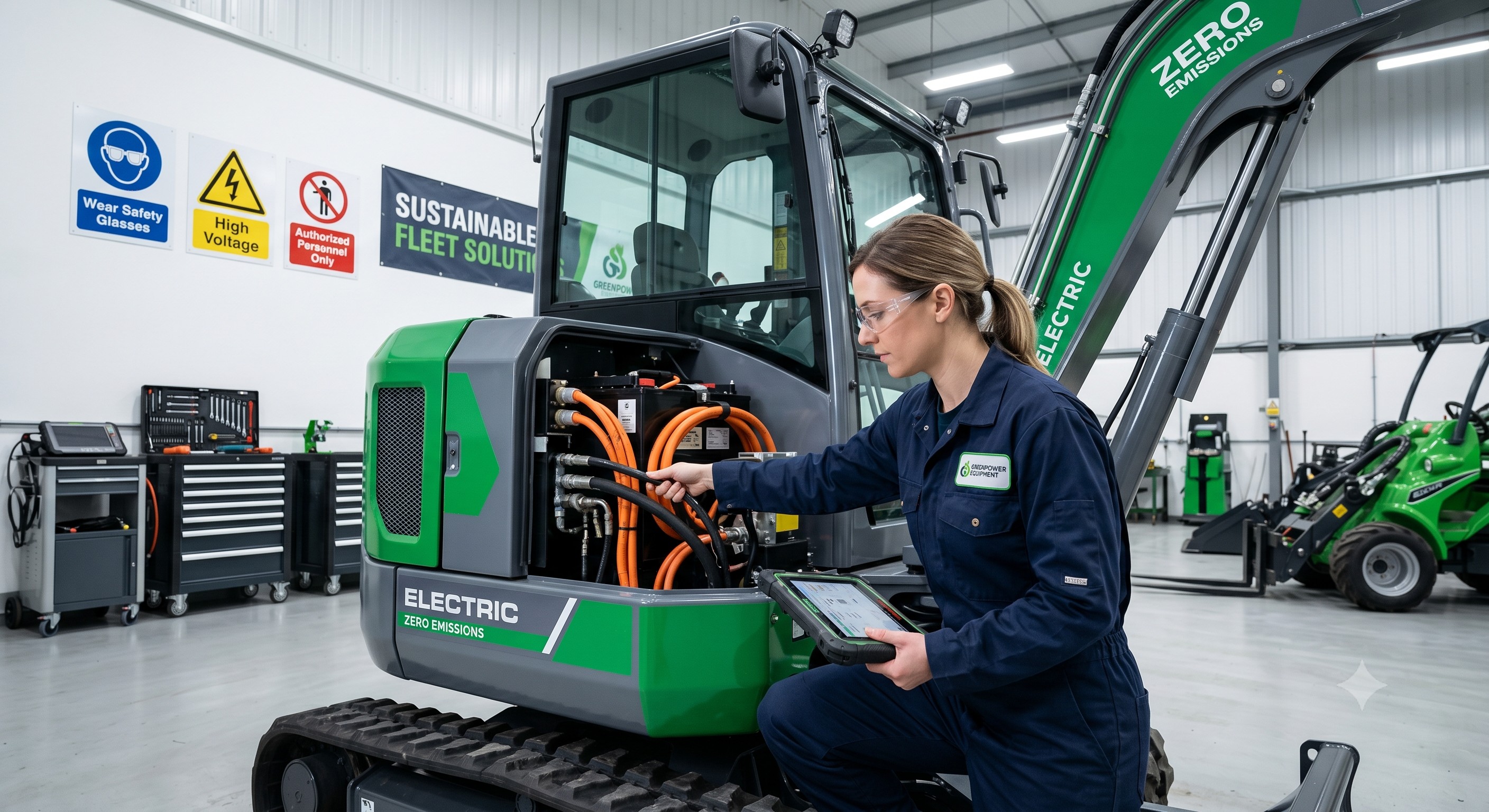
Frequently Asked Questions
Q1: What is the standard maintenance interval for an environmentally friendly excavator?
The standard maintenance interval for an environmentally friendly excavator is every 500 operating hours or 3 months, whichever comes first. Electric models extend hydraulic oil change intervals to 2,000-3,000 hours due to lower thermal stress. For hybrid diesel-electric units, engine oil and filter changes remain at 500 hours, but electric drive components require only annual torque checks on high-voltage cabling.
Q2: What is the maximum payload of an environmentally friendly excavator?
The maximum payload of an environmentally friendly excavator ranges from 6 metric tons for compact electric models up to 45 metric tons for large hybrid Stage V units. For example, a standard 20-ton electric excavator delivers a 18,500 lb (8.4 metric ton) breakout force and a bucket payload of 4.5 cubic yards. Always refer to the manufacturer's load chart, as battery placement reduces counterweight capacity by approximately 8-10% compared to diesel-only versions.
Q3: What type of hydraulic fluid is recommended for an environmentally friendly excavator?
The recommended hydraulic fluid for an environmentally friendly excavator is a biodegradable ISO 15380 HEES (synthetic ester) fluid or a non-toxic USDA BioPreferred oil. Using standard mineral oil in eco-excavators can damage seals designed for lower viscosity bio-fluids and void environmental compliance certifications. For electric excavators, use electrically non-conductive hydraulic fluid (dielectric strength > 30 kV) to prevent battery-pack short circuits in case of hose failure.
Q4: Are conventional excavator attachments compatible with an environmentally friendly excavator?
Yes, conventional excavator attachments are compatible with environmentally friendly excavators, provided the auxiliary hydraulic flow and pressure ratings match. However, electric excavators have reduced continuous hydraulic flow (typically 20-30 GPM vs. 35-45 GPM on diesel models) to preserve battery life, which may slow high-demand attachments like mulchers or rock breakers. Use a flow-controlled coupler or select an attachment with lower flow requirements (e.g., < 25 GPM) for optimal performance.
Q5: What are the engine emission standards for an environmentally friendly excavator?
Environmentally friendly excavators must meet either EU Stage V (emission-free for battery units) or EPA Tier 4 Final with near-zero PM and NOx levels below 0.02 g/kWh. Hybrid models achieve CO2 reductions of 25-35% versus Tier 3 baseline, while fully electric excavators produce zero tailpipe emissions. Always verify that the machine's engine emissions certificate matches your job site’s regulatory zone (e.g., LEED v4, London ULEZ, or CARB low-NOx requirements).
Q6: Where can I buy spare parts for an environmentally friendly excavator?
You can buy spare parts for an environmentally friendly excavator directly from OEM dealers (Caterpillar, Volvo, Hitachi, or Sany eco-lines) or through certified electric component suppliers (e.g., Dana TM4 for motors, Bosch Rexroth for eco-hydraulics). High-wear items like bucket teeth, track pads, and filters are interchangeable with conventional excavator parts, but high-voltage batteries, inverters, and bio-hydraulic seals require OEM serial number verification. Maintain a 2% spare parts inventory of unique eco-components (e.g., HV contactors, coolant pumps) to avoid 8-12 week lead times.
Q7: How often should hydraulic fluid be replaced in an environmentally friendly excavator?
Hydraulic fluid in an environmentally friendly excavator should be replaced every 2,000 operating hours for bio-hydraulic oils (ISO 15380) and every 3,000 hours for electric excavators using non-conductive fluids. Sampling every 500 hours for water content (< 500 ppm) and oxidation stability (acid number < 2.0 mg KOH/g) can extend replacement intervals by up to 25%. For hybrid models, replace the hydraulic fluid at the same interval as the engine oil change (500 hours) due to thermal cross-contamination from the diesel circuit.
Q8: What is the typical battery lifespan of an electric environmentally friendly excavator?
The typical battery lifespan of an electric environmentally friendly excavator is 8 to 10 years or 10,000 operating hours, retaining 80% of original capacity. Lithium-iron-phosphate (LFP) batteries, used by Volvo and Caterpillar, provide 4,000+ full charge cycles before replacement. To maximize lifespan, avoid daily 100% discharges; maintain a 20-80% state of charge and store the excavator at 15-25°C (59-77°F) when not in use for over 30 days.