

Overview
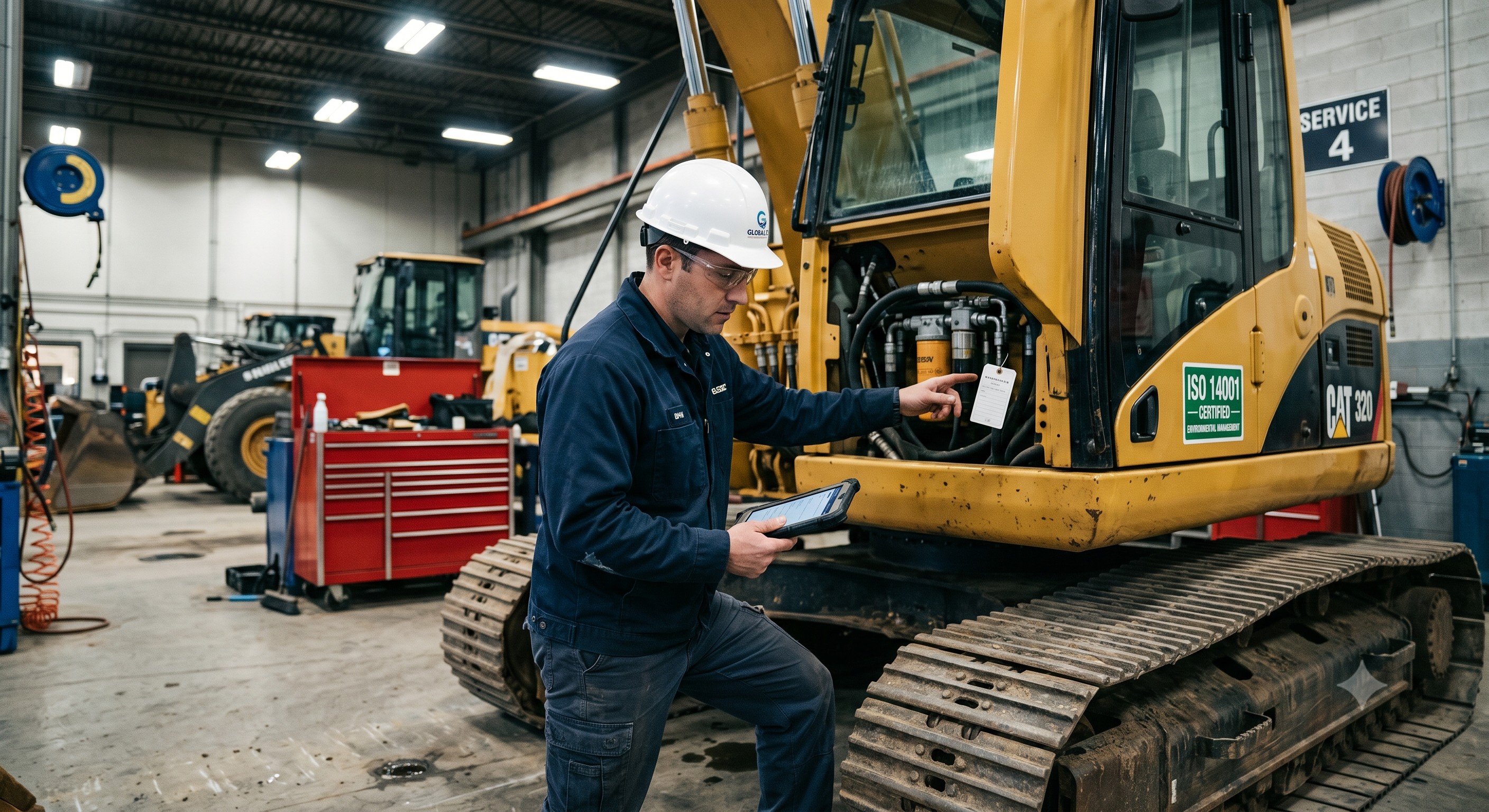
For B2B procurement and fleet managers, the ISO 14001 excavator represents a commitment to environmental management standards without compromising machine performance. Below are expert answers to the most common pre-sales and post-sales technical questions, designed to help you maximize uptime, maintain compliance, and optimize total cost of ownership.
Frequently Asked Questions
Q1: What is the standard maintenance interval for an ISO 14001 certified excavator?
The standard maintenance interval for an ISO 14001 excavator is every 250 engine hours or three months, whichever comes first. This includes engine oil and filter changes, fuel filter replacement, and a full hydraulic system inspection. Extended intervals of up to 500 hours are permissible when using synthetic oils and operating under ISO 14001 environmental guidelines, but always verify with your machine's OEM manual.
Q2: What is the maximum payload and operating capacity for an ISO 14001 compliant excavator?
The maximum operating capacity for a standard ISO 14001 excavator (20-ton class) is 18,500 kg (40,785 lbs) lift capacity at ground level, with a rated payload of 6,500 kg (14,330 lbs) for a standard bucket. For larger 30-ton class models, maximum payload reaches 12,000 kg (26,455 lbs). Derate payload by 15% when using extended reach attachments or operating on slopes exceeding 5 degrees.
Q3: What engine emissions standards apply to ISO 14001 excavators?
ISO 14001 excavators must meet at least EU Stage V or EPA Tier 4 Final emissions standards, with NOx levels below 0.4 g/kWh and particulate matter under 0.015 g/kWh. Key compliance features include:
– Diesel particulate filter (DPF) with automatic regeneration
– Selective catalytic reduction (SCR) with DEF fluid consumption of 3-5% of fuel burn
– Closed crankcase ventilation system to prevent blow-by emissions
Q4: What attachment compatibility should I check before buying an ISO 14001 excavator?
ISO 14001 excavators are compatible with S-type (ISO 13031) quick couplers and all attachments meeting hydraulic flow ratings of 120-450 L/min depending on model class. Verify three critical parameters before purchase: auxiliary hydraulic pressure (up to 350 bar), attachment weight (not exceeding 10% of machine operating weight), and electronic interface compatibility (CANbus ISO 11783). Non-certified attachments void environmental compliance.
Q5: When should hydraulic fluid be replaced in an ISO 14001 excavator?
Hydraulic fluid in an ISO 14001 excavator must be replaced every 2,000 engine hours or 24 months, but immediately if oil analysis shows ISO 4406 cleanliness code exceeding 18/16/13. Use only biodegradable fluids (ISO 15380 HEES classification) to maintain ISO 14001 certification. Fluid sampling intervals are every 500 hours for early detection of contamination or water ingress exceeding 0.2%.
Q6: What are the available spare parts and their typical lead times for ISO 14001 excavators?
Critical spare parts for ISO 14001 excavators include undercarriage components (track chains, sprockets, rollers) with 5-7 day lead time, hydraulic pumps and motors (10-15 days), and emissions system components (DPF, DEF injectors, NOx sensors) with 2-3 day expedited shipping. Routine service parts like filters, hoses, and seals are stocked regionally for 24-hour delivery. Non-critical parts (cab glass, trim, electric switches) typically ship within 14-21 business days.
Q7: Does an ISO 14001 excavator require special operator training?
Yes, ISO 14001 excavators require operators to complete an Environmental Management Awareness module (typically 4 hours) covering spill prevention, regeneration procedures, and emissions monitoring. No additional heavy machinery license is required beyond standard excavator certification, but fleet managers must keep digital logs of DEF refills, DPF active regeneration events, and any hydraulic fluid top-ups for audit purposes.
Q8: What is the fuel efficiency of an ISO 14001 certified excavator compared to non-certified models?
ISO 14001 excavators deliver 12-18% better fuel efficiency (5.5-7.2 L/hour for a 20-ton class) than non-certified Tier 3 models, achieved through auto-idle, eco-mode, and variable displacement hydraulics. Actual fuel consumption depends on duty cycle: light excavation averages 6.2 L/hour, heavy trenching 8.5 L/hour, and demolition with hammer attachment 11.0 L/hour. Fuel savings typically pay back the environmental compliance premium within 1,500 operating hours.