This guide provides a comprehensive technical overview of modern mini excavators, outlining critical specifications, safety standards, and structural design for informed direct purchasing decisions.
EXECUTIVE SUMMARY
This document serves as a definitive technical overview and purchasing guide for the modern mini excavator, a cornerstone of efficiency in the construction, mining, and agricultural sectors. Defined as hydraulic excavators weighing up to 10 metric tons, these machines have become indispensable on increasingly confined jobsites, offering a superior blend of power, fuel efficiency, and attachment versatility . As the second most popular category of construction equipment, their adoption is driven by lower ownership costs compared to larger models and their capacity to serve as a high-value entry point for contractors and owner-operators .
This guide provides a detailed technical breakdown of the core systems, structural design, and safety features that define a world-class mini excavator. For direct buyers, understanding the engineering specifications is paramount to identifying a machine that delivers maximum return on investment. From advanced, load-sensing hydraulic systems to compliant, operator-centric cabs, each component is engineered for durability and peak performance. This document equips the discerning buyer with the necessary knowledge to navigate the market, emphasizing performance metrics that matter beyond the brochure to ensure long-term reliability and productivity .
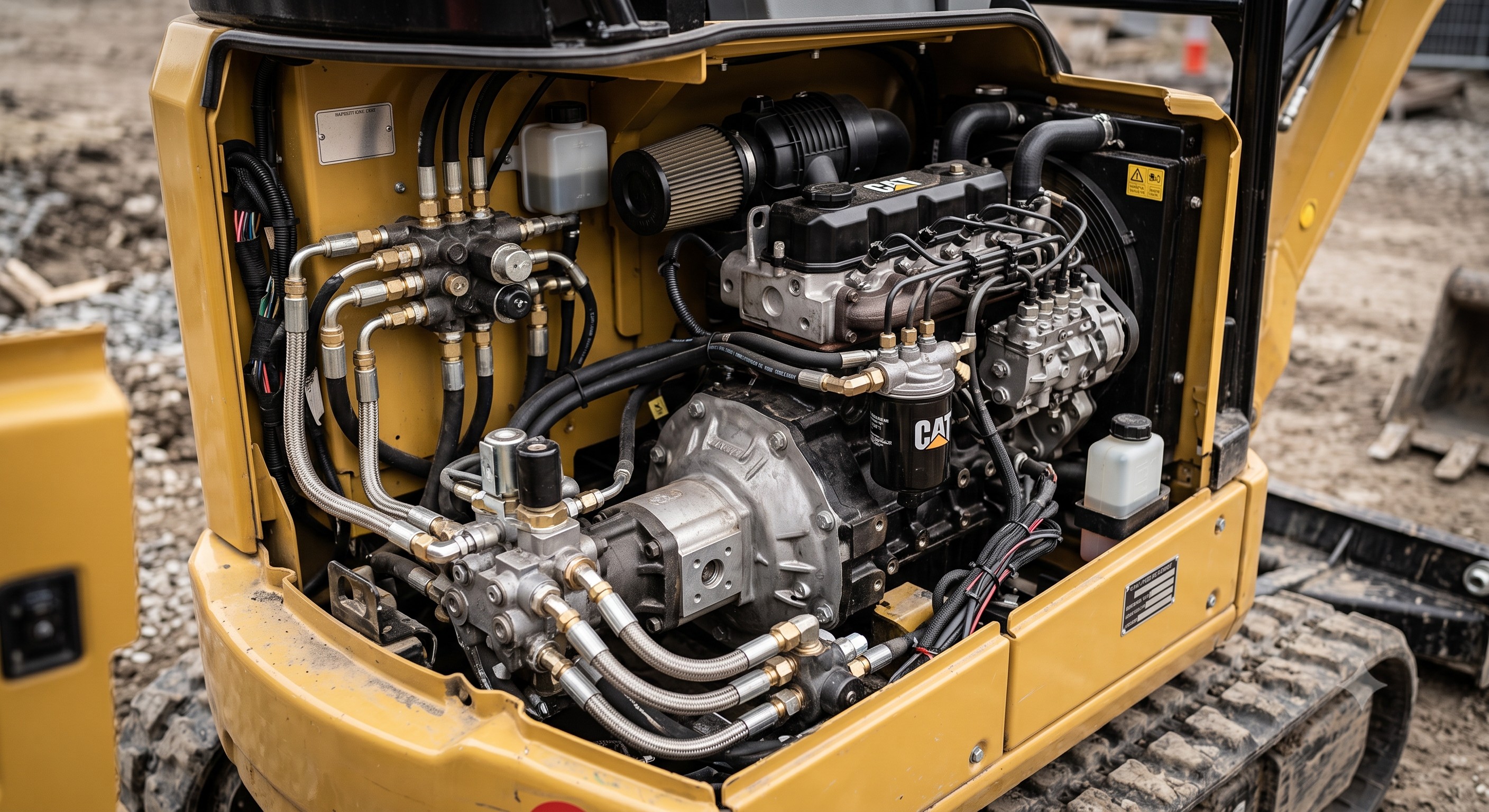
STRUCTURAL INTEGRITY & POWERTRAIN
The durability of a mini excavator begins with its chassis and undercarriage, which are constructed from high-grade, reinforced steel to withstand rigorous jobsite demands and torsional stresses. Premium manufacturers utilize a box-section track frame and a robust center frame to provide a solid foundation for all attached components, ensuring long-term structural integrity . The undercarriage often features self-cleaning designs and durable track components to minimize wear and maintenance in harsh conditions .
At the heart of the powertrain is a high-performance diesel engine, typically from a renowned manufacturer such as Caterpillar, Komatsu, or Isuzu, designed to meet stringent emission standards like U.S. EPA Tier 4 Final/EU Stage V . These engines deliver exceptional net power and torque (e.g., up to 69.5 hp) while optimizing fuel efficiency . The hydraulic system, a critical performance differentiator, is a variable displacement piston pump system, often load-sensing, which intelligently directs oil flow to the implements, travel, and swing circuits . This ensures that power is available precisely where and when it is needed, enhancing fuel economy and cycle times. For example, a pump flow of up to 62 gpm provides the necessary hydraulic capacity for demanding attachments and high-productivity work .
KEY FEATURES & OPERATOR COMFORT
- Load-Sensing Hydraulics: The advanced hydraulic system features a variable displacement piston pump that delivers precise, on-demand flow. This load-sensing technology optimizes power distribution, enhancing efficiency and providing smooth, responsive control for multifunction operations .
- ROPS/FOPS Certified Cab: The operator station is built with a Roll-Over Protective Structure (ROPS) and Falling Object Protective Structure (FOPS), certified to ISO 12117-2:2008 standards . This ensures maximum operator safety from rollovers and falling debris. Cabin models offer a sealed, pressurized environment with climate control, adjustable air-suspension seats, and ergonomic controls to reduce fatigue and improve productivity .
- Zero-Tail Swing Configuration: Many models feature a zero-tail swing design, allowing the machine to rotate fully within the width of its tracks. This is a critical feature for working in urban environments, confined spaces, and alongside traffic or structures, significantly enhancing jobsite safety and maneuverability .
- Advanced Operator Control Panel: A modern, intuitive control panel provides the operator with critical machine data at a glance, including fuel levels, coolant temperature, and hydraulic oil temperature. This panel often integrates with telematics systems for remote monitoring of machine health, location, and maintenance schedules, optimizing fleet management and uptime .
- Enhanced Visibility & Safety Systems: To meet modern safety standards, equipment is equipped with systems to ensure 360-degree visibility around the machine . This includes a combination of mirrors, rear-view cameras, and proximity sensors to eliminate blind spots and protect ground personnel.
COMPLIANCE & SAFETY STANDARDS
This equipment is manufactured in strict compliance with leading international safety and environmental standards. The engine meets U.S. EPA Tier 4 Final and EU Stage V emission regulations, reflecting a commitment to reduced emissions and environmental responsibility . The structural integrity and safety of the operator environment are validated through ROPS/FOPS certifications (ISO 12117-2:2008) and compliance with the European Commission Machinery Directive (2006/42/EC) . The machine also adheres to applicable sections of OSHA regulations (29 CFR 1926) for safe operation on job sites . Additionally, the materials and manufacturing processes are developed to achieve high recyclability, aligning with sustainable end-of-life practices .
TECHNICAL SPECIFICATIONS
The following table presents key parameters for a typical 5- to 6-tonne class mini excavator, illustrating the performance and physical characteristics that define this versatile category.
| Parameter | Specification |
|---|
| Engine Model | Caterpillar C3.3B (Tier 4 Final / Stage V) |
| Net Power | 69.5 hp (ISO 9249:2007) |
| Operating Weight | 23,002 lb (Maximum) |
| Hydraulic System Type | Load Sensing with Variable Displacement Piston Pump |
| Pump Flow | 62 gal/min at 2,400 rpm |
| Equipment Operating Pressure | 4,134 psi |
| Digging Force (Bucket) | 17,459 lb |
| Max Travel Speed (High/Low) | 2.9 / 1.6 mile/h |
| Max Dig Depth | 205.2 in |

