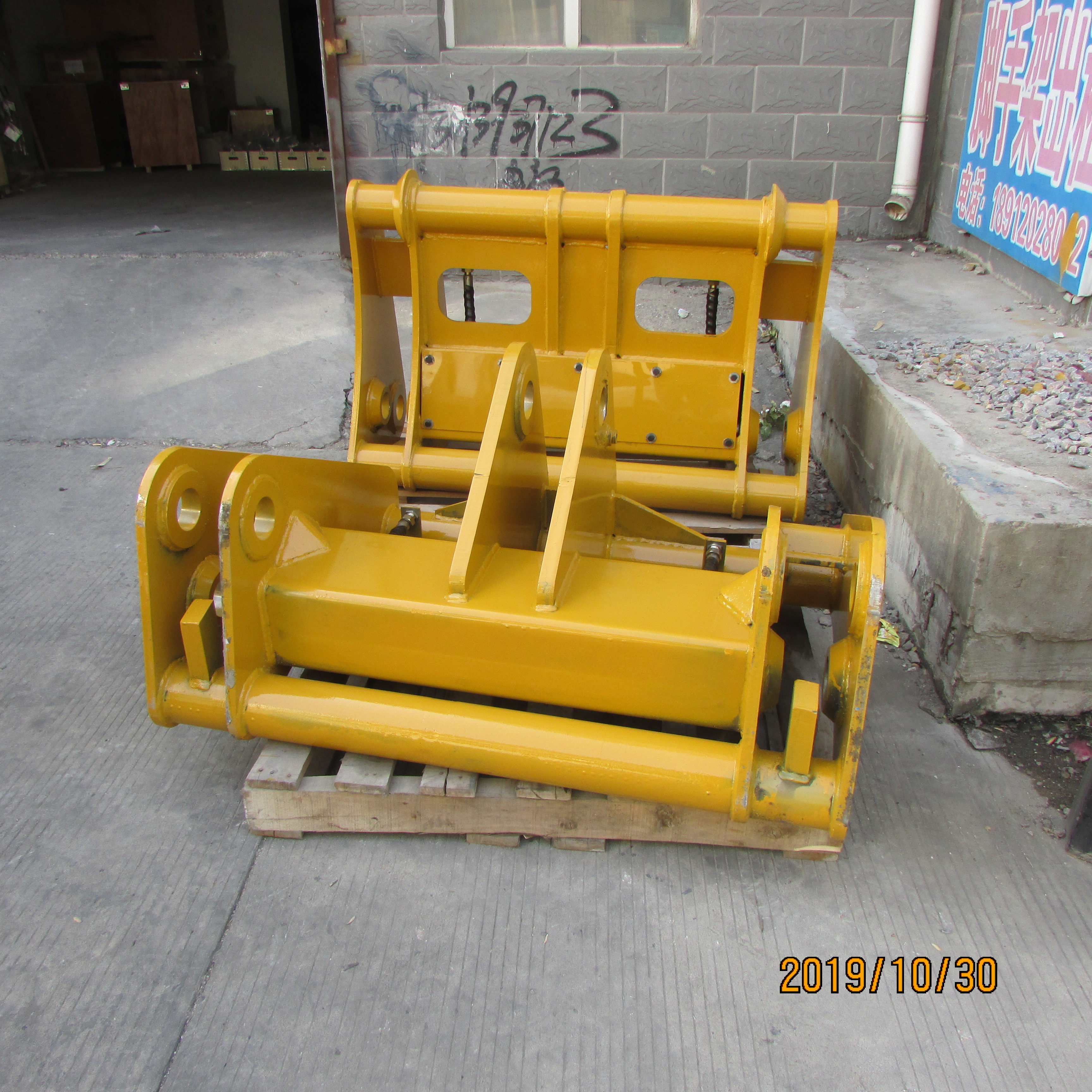
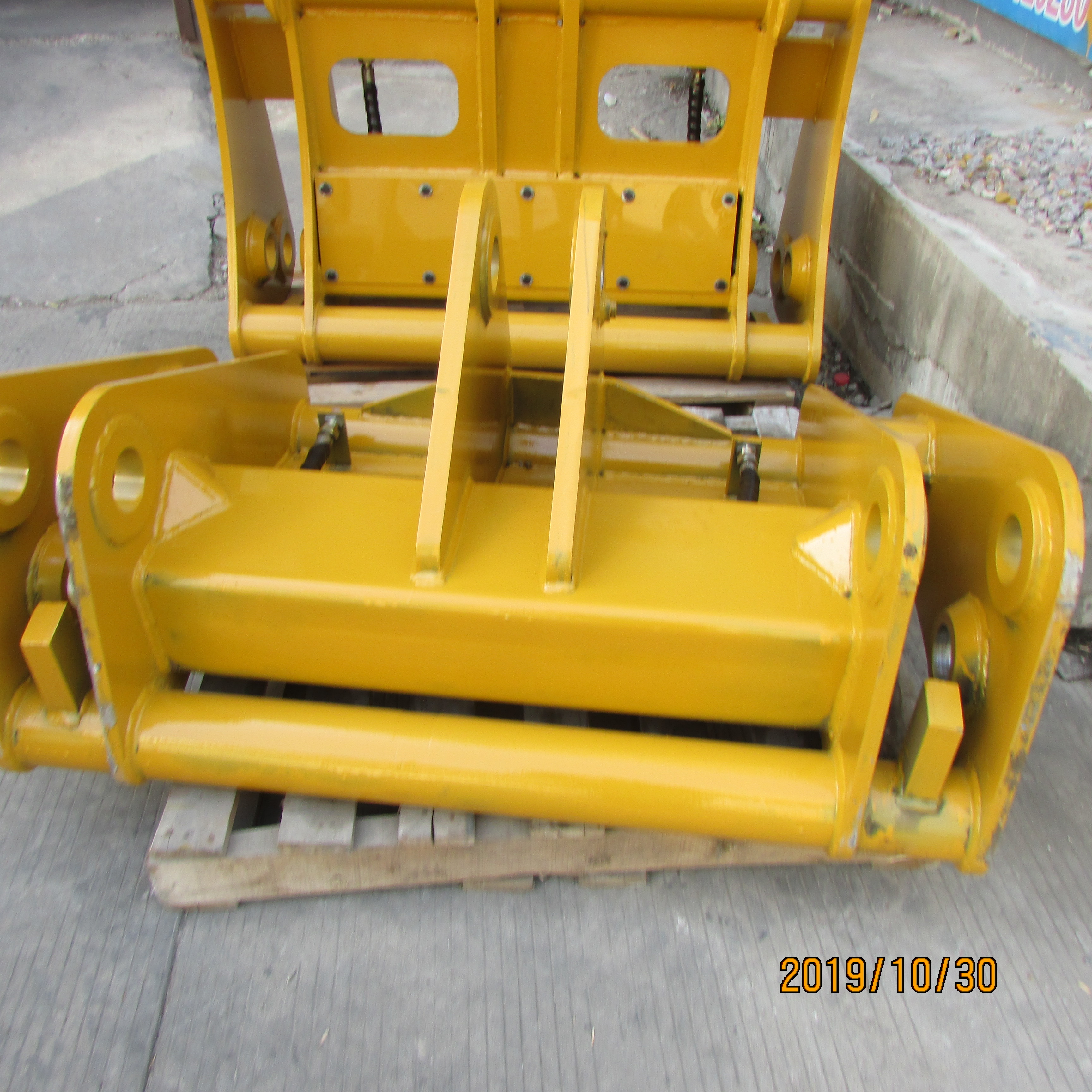
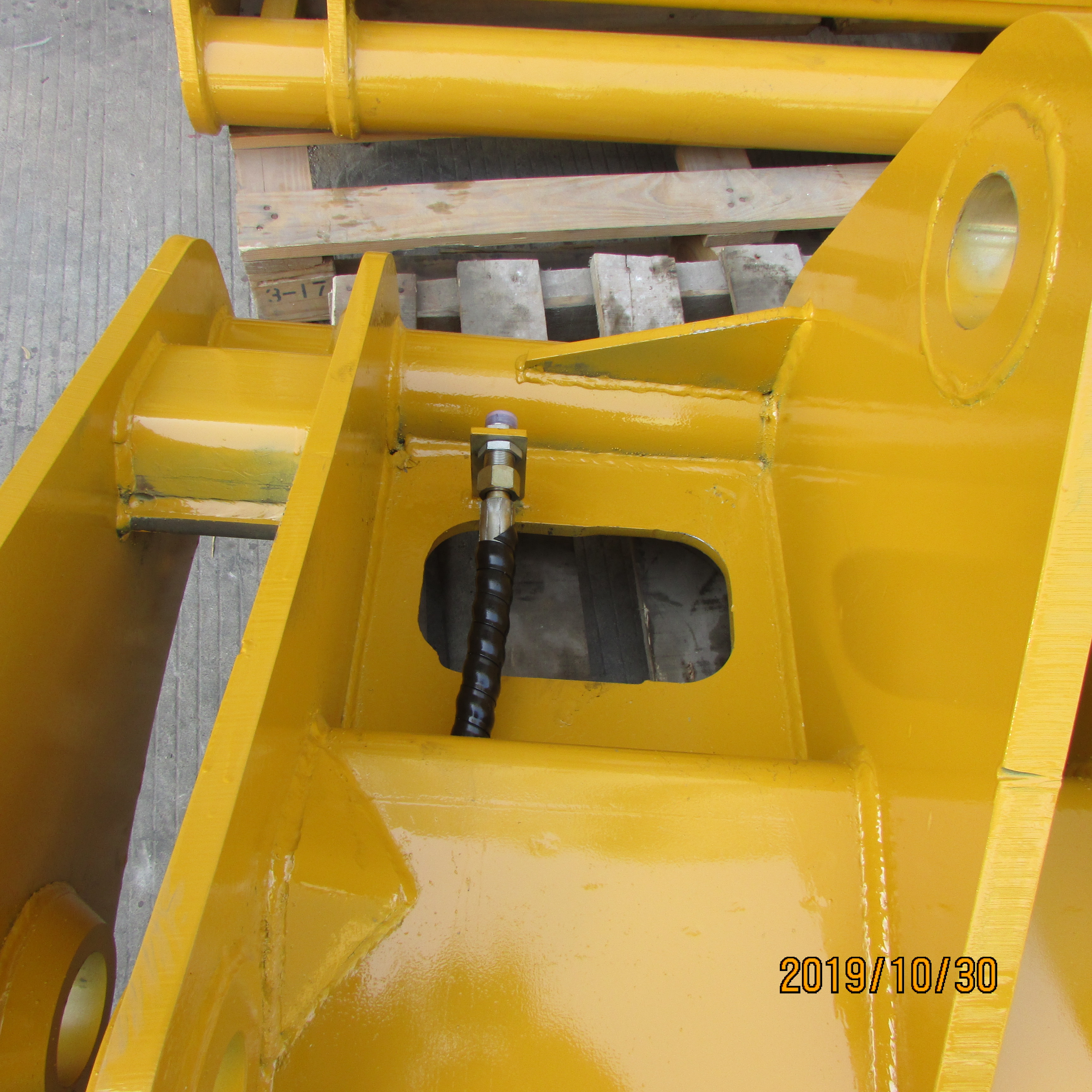
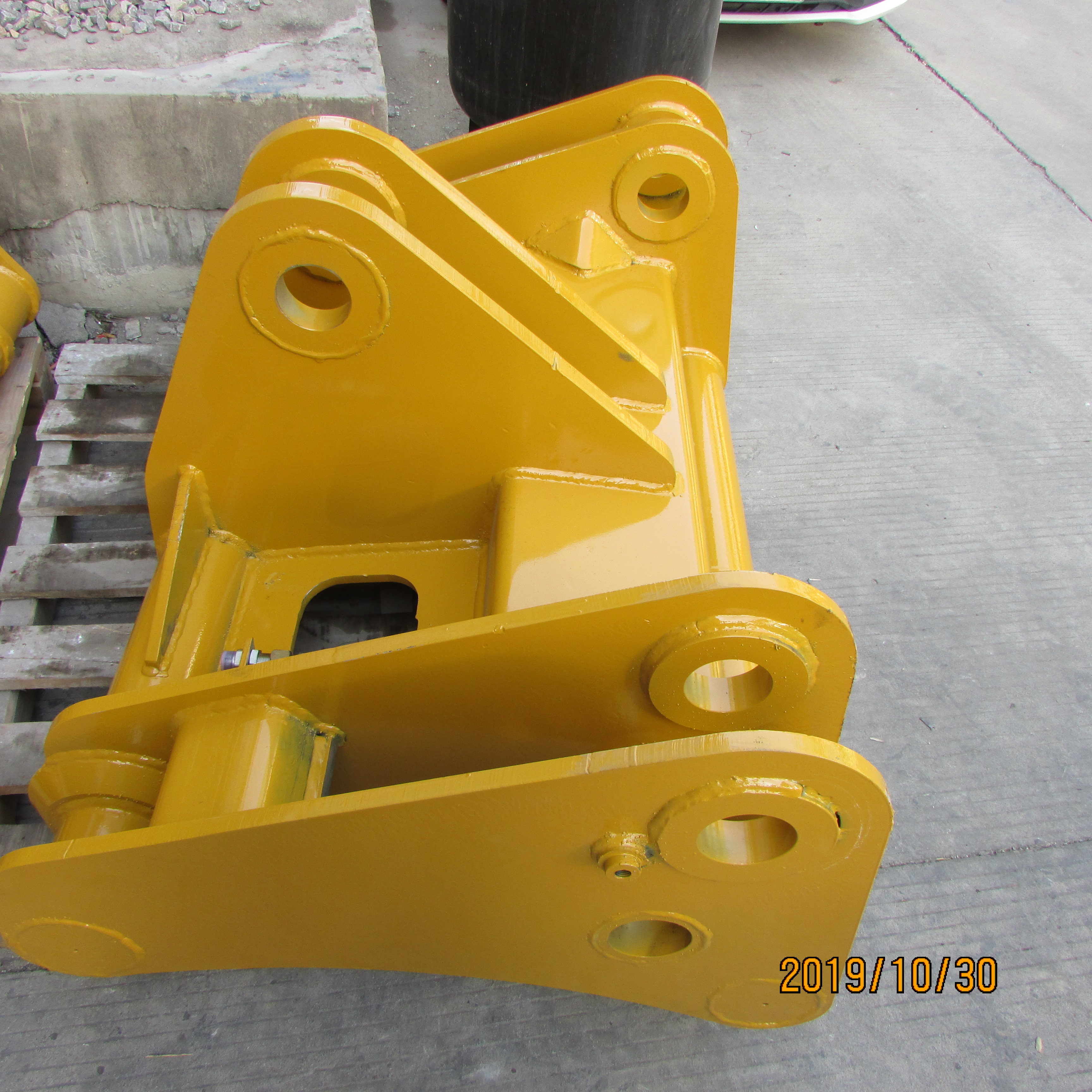
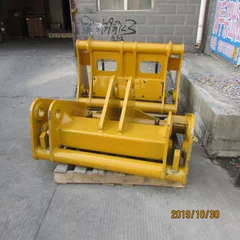
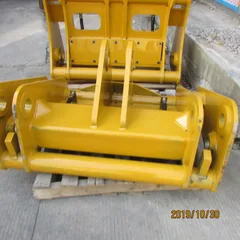
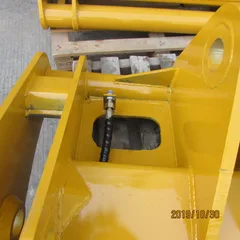
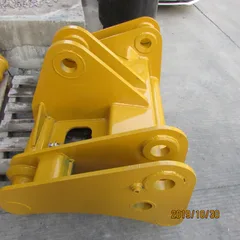
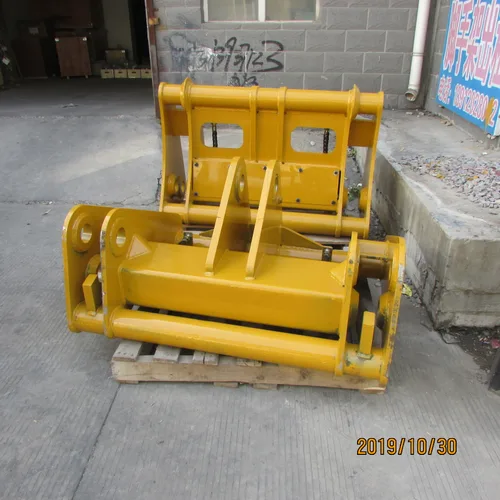
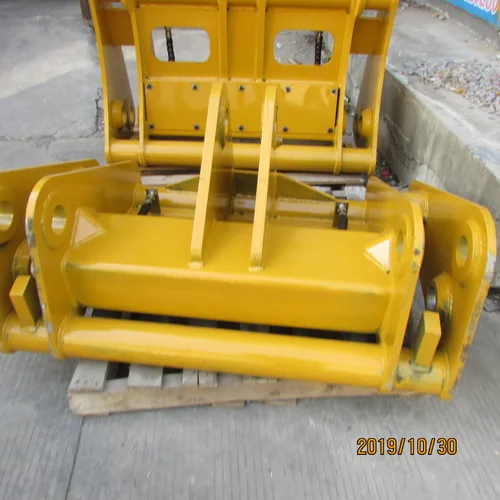
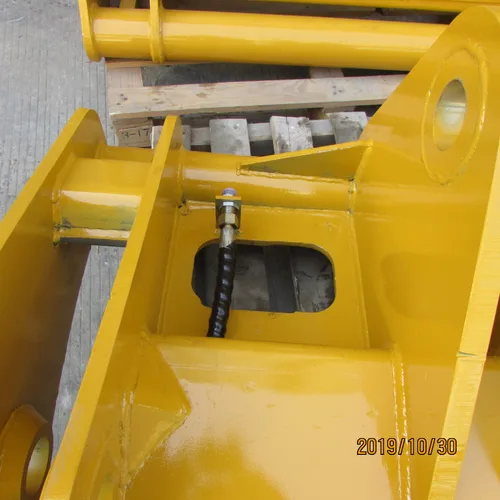
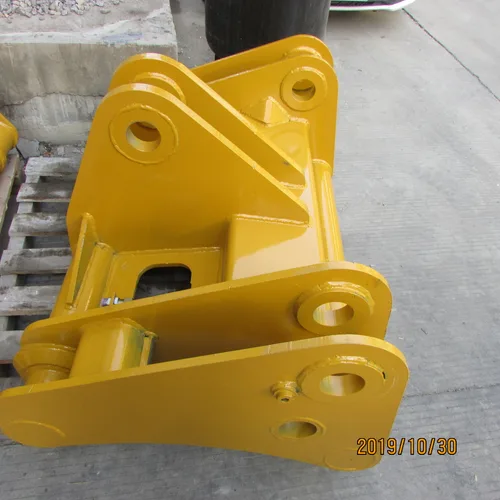
A "quick coupler carrier" (also called quick coupler bracket, quick-attach frame, or attachment quick-change device) is the core interface component of the attachment quick-change system in construction machinery, used at the front of loaders, skid steers, and backhoe loaders to enable rapid attaching and detaching of different attachments such as buckets, breakers, grapples, fork tines, and sweepers. XCMG has filed multiple patents in this domain in recent years—for instance, the 2024 application "A Loader Quick Coupler Carrier" (publication CN 119041516 A) describes a structure comprising an articulated frame, bidirectional quick-change cylinder, quick coupler pins, warning rods, and distance sensors for mechanical + electronic dual-position indication ; another 2024 application "A Loader Attachment Quick-Change Device and Loader" (publication CN 119061958 A) emphasizes boring-process manufacturing of hook pin holes and telescopic pin holes on both sides to ensure coaxiality and parallelism, reducing user difficulty and cost . XCMG's XC958 loader product documentation explicitly states "optional quick coupler to enable rapid switching between different buckets and attachments" , while the XC998 quick-change forkloader is specifically configured with a quick-change mechanism for easy switching between fork tines, buckets, and other attachments .
Across different host platforms and tonnage classes, quick coupler devices differ drastically in structural form, interface dimensions, pin specifications, and hydraulic quick-change circuits, mainly falling into the following categories—easily confused when ordering and replacing:
-
Mechanical quick coupler: Attachment fixation via manual pin insertion/removal or lever locking—simple structure, low cost, but low replacement efficiency and safety concerns; mostly used on small skid steers or entry-level models.
-
Hydraulic quick coupler: Quick-change cylinder drives pin extension/retraction, allowing the operator to change attachments from inside the cab—high efficiency, good safety, currently the mainstream configuration for mid-to-large loaders, as seen in XCMG's related patents .
-
ISO-standard interface vs. proprietary manufacturer interface: International quick couplers come in multiple standard interface specifications that are mutually incompatible; even within the same OEM, quick couplers across different tonnage classes (e.g., 3t, 5t, 8t loaders) differ in interface dimensions and pin specs and cannot be interchanged across tonnage.