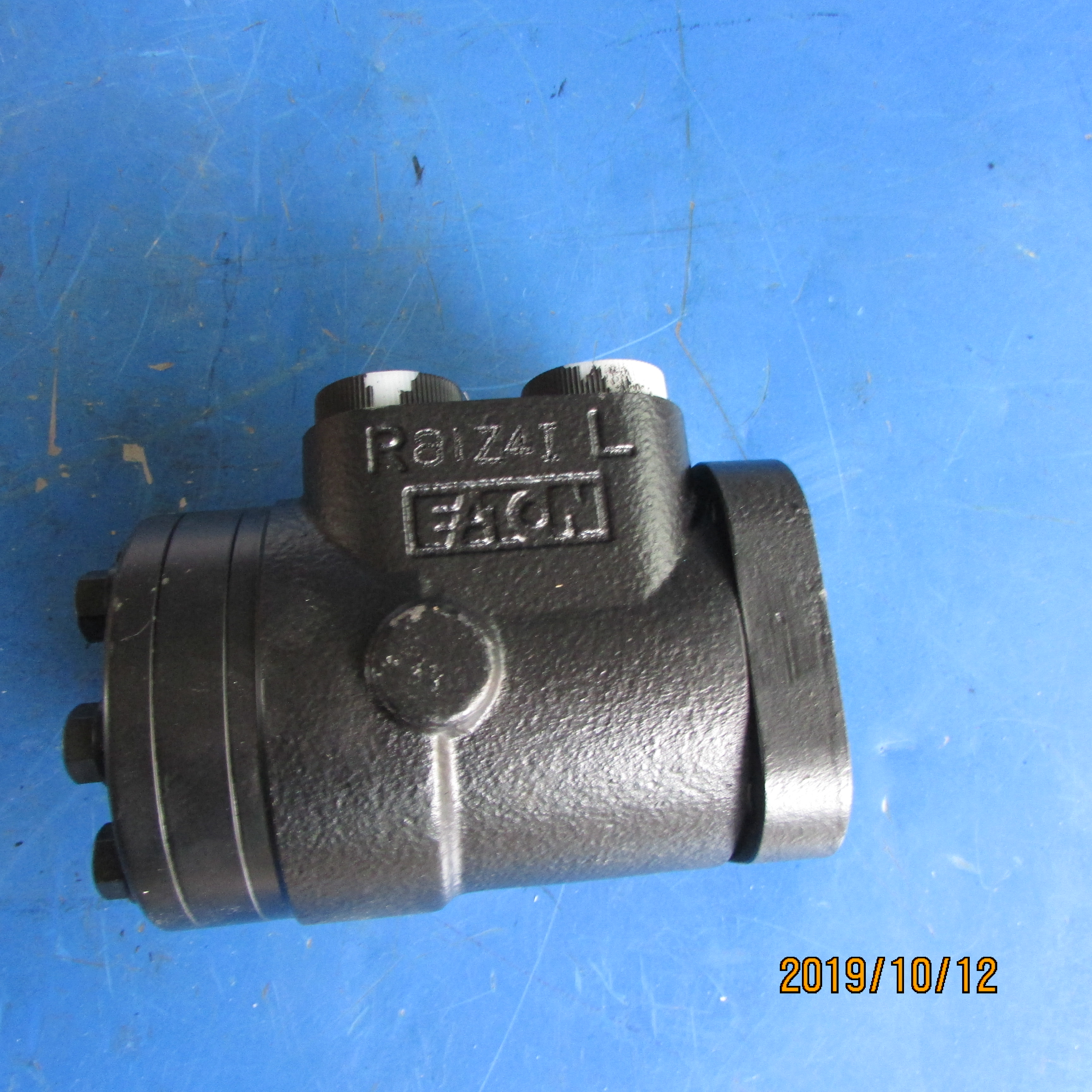
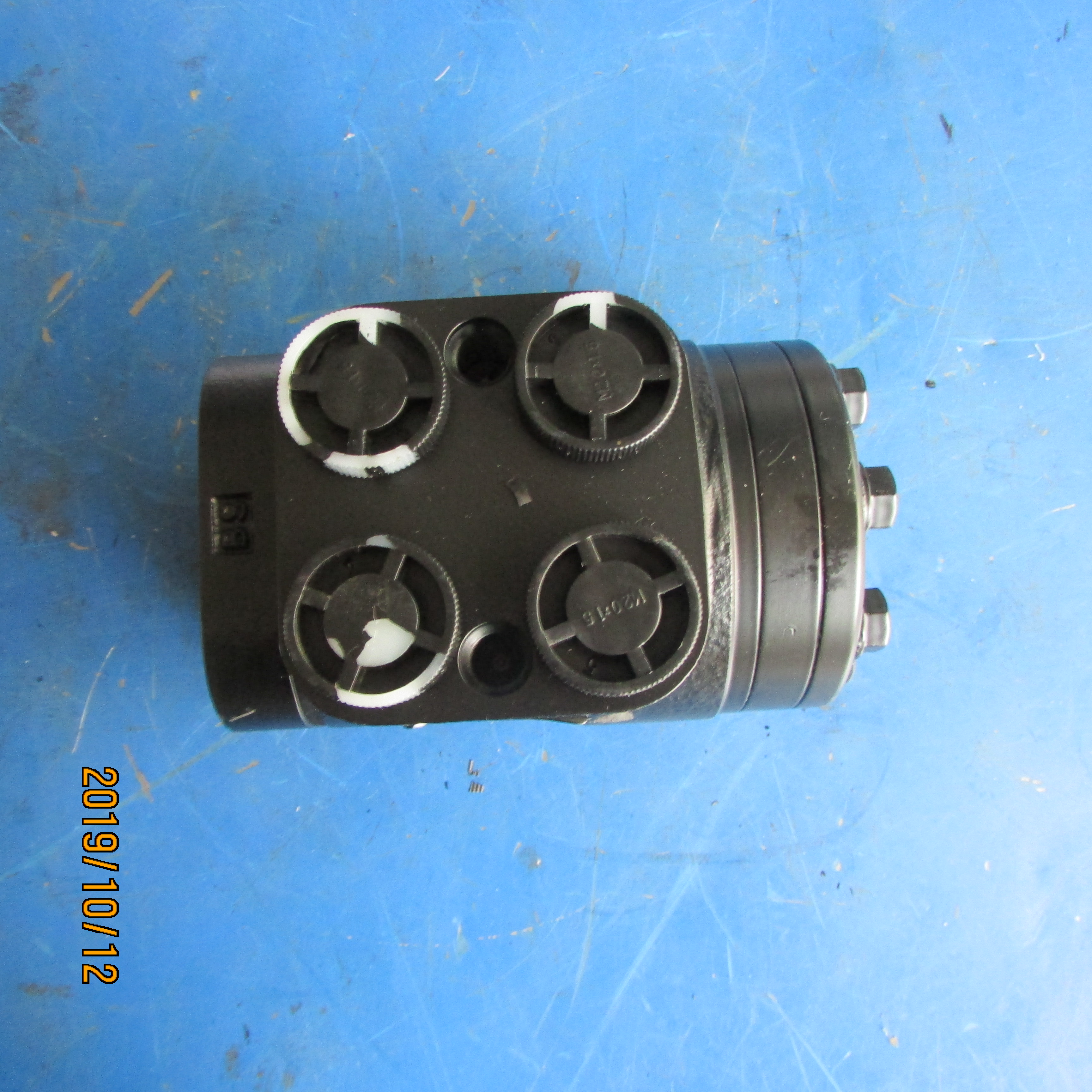
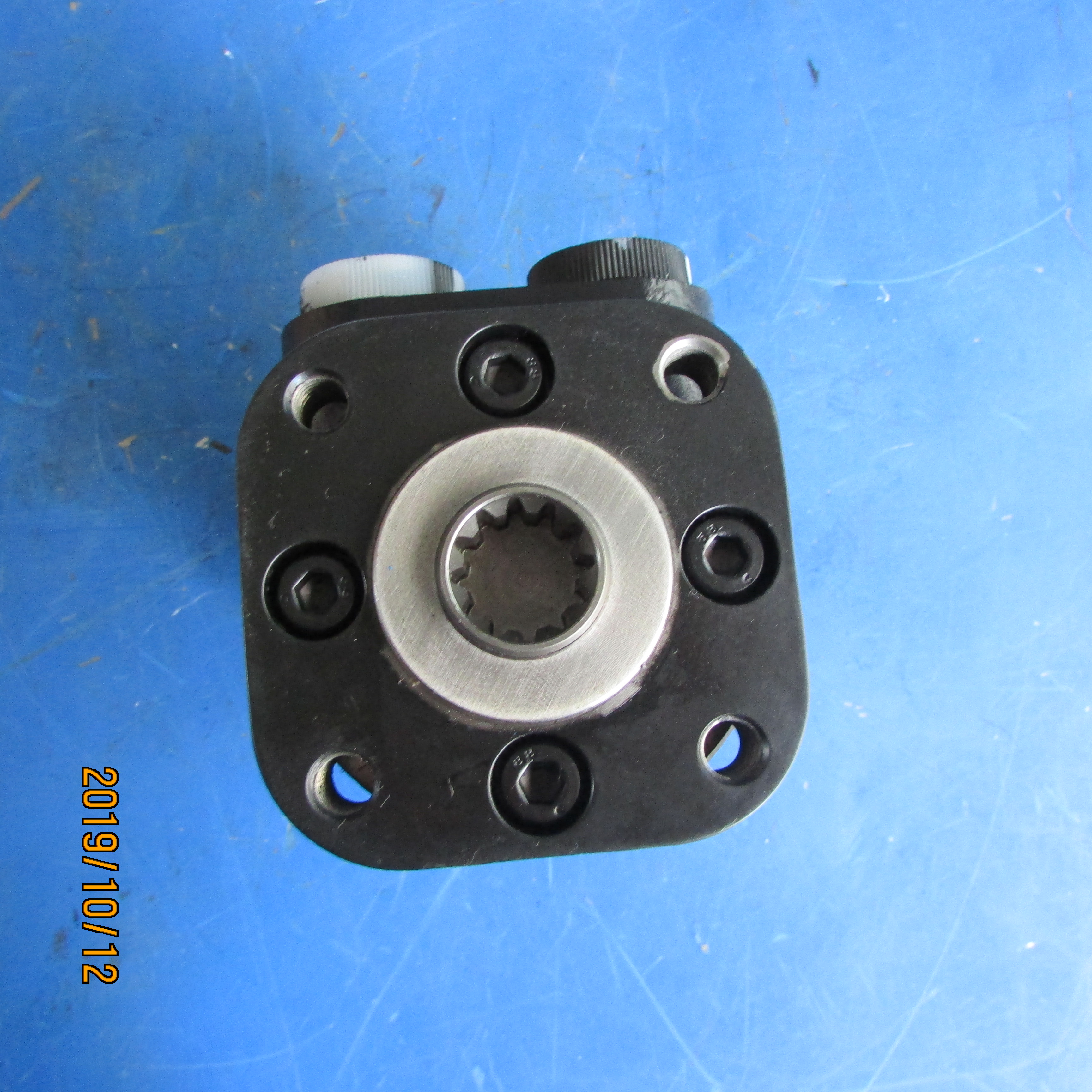
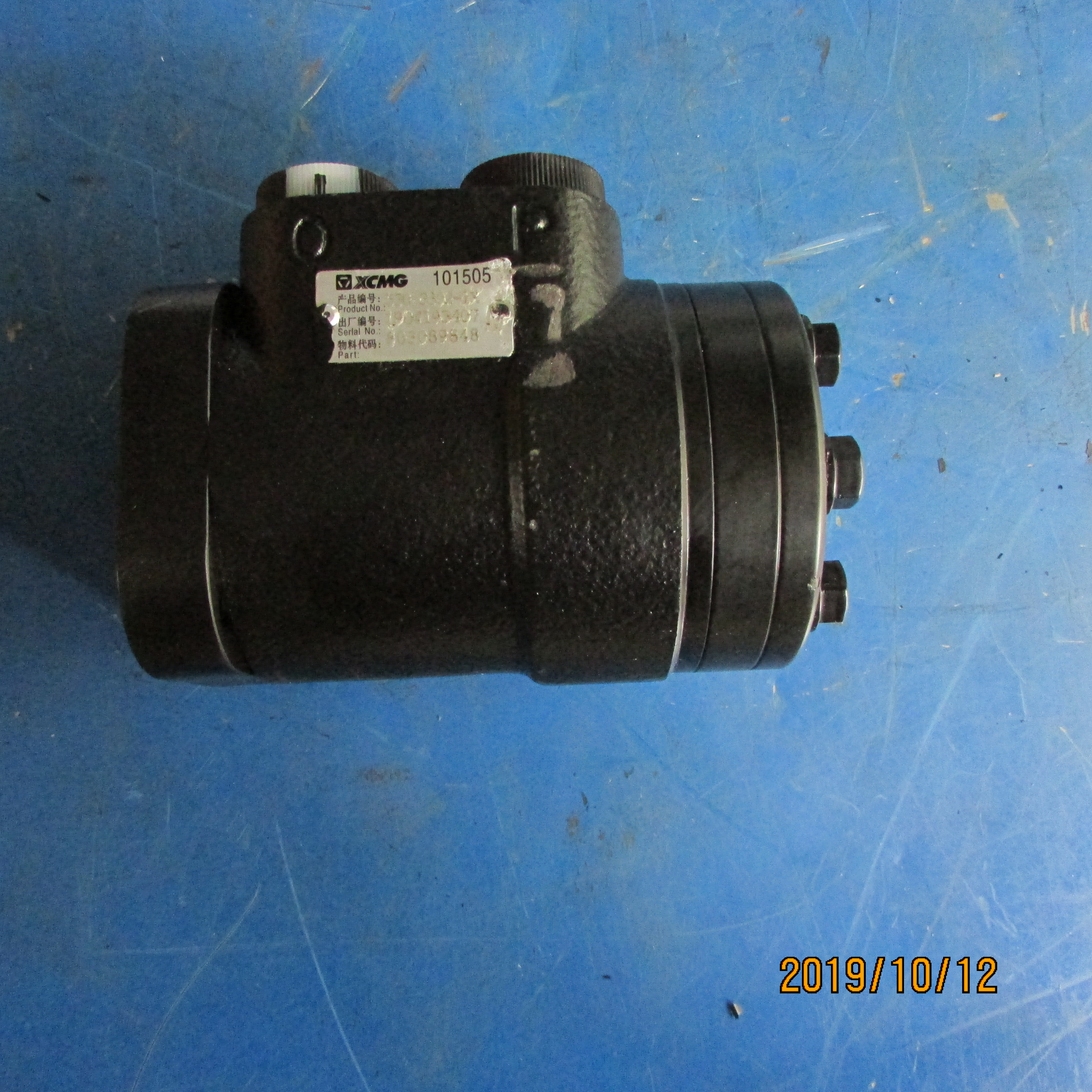
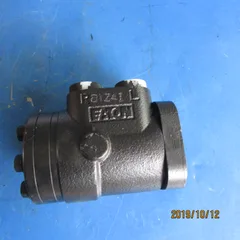
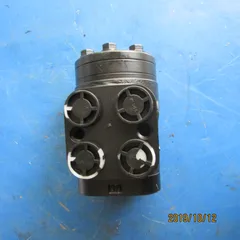
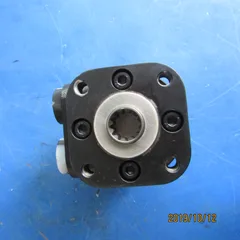
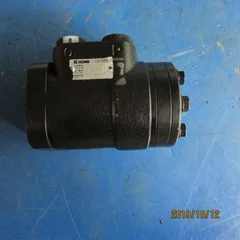
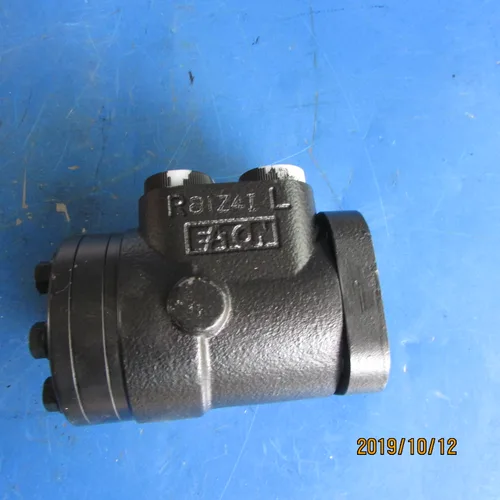
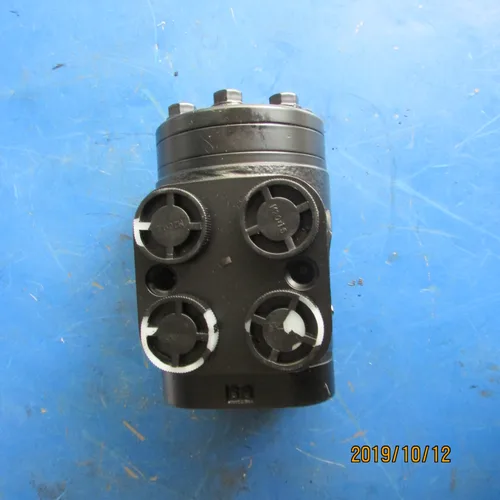
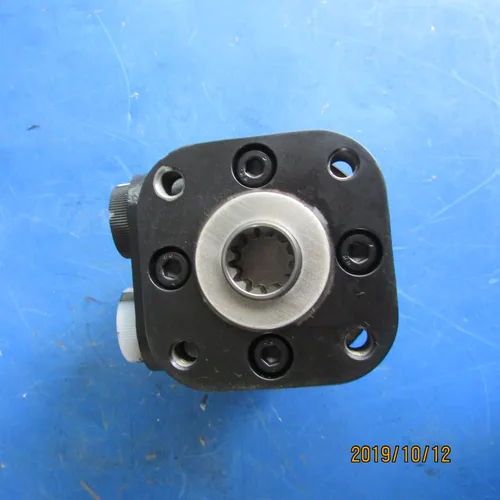
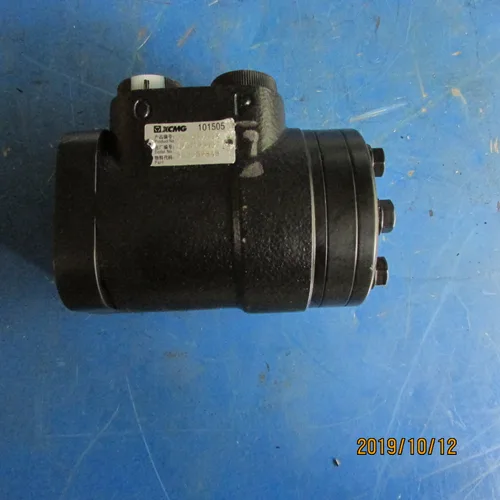
A hydrostatic steering unit (also called orbitrol, steering valve, or steering control unit) is the core control element in a hydrostatic steering system. Mounted inside the cab and connected to the steering wheel, it receives the driver's steering-wheel torque input through a splined input shaft, proportionally distributing hydraulic oil flow to the steering cylinders to achieve machine steering. The BZZ-type hydrostatic steering unit mainly consists of a servo valve, cycloidal pin-wheel clutch pair, coupling shaft, drive pin, spring plate, and check valve; the valve spool connects directly to the steering column to control oil flow direction, while the rotor and stator form a pair of internal-mesh cycloidal pin-wheel gears that act as a metering motor during power steering—ensuring oil flow into the steering cylinder is proportional to the steering-wheel angle—and function as a manual oil pump during manual steering.
The BZZ series steering units can be differentiated along multiple dimensions by model code:
-
Displacement class: specifications such as 80, 100, 125, 160, 200, 250, 320, 400, 500, 630, 800, 1000 mL/r, etc.;
-
Function code: 1=open-center non-reaction, 2=open-center reaction, 3=closed-center non-reaction, 5=load-sensing;
-
Mounting style: A=long spigot cross-block mounting, B=SAE involute spline mounting, C=short spigot cross-block mounting.
Per the current industry draft standard JB/T 5120.1, the rated pressure of hydrostatic open-center steering units is not less than 16 MPa, the T-port pressure rating is not less than 4 MPa, and they must demonstrate good mechanical resistance torque, power-steering performance, sealing, and durability (no fewer than 400,000 power-steering cycles). The BZZ-series common type is suitable for various steering systems including tractors, loaders, and road rollers, making it the mainstream choice for heavy-equipment hydraulic steering.