

Overview
A semi trailer washout is the interior cleaning and sanitation of a trailer between loads, typically performed at a commercial truck wash, a dedicated washout bay, or an in-house facility. For fleet managers and procurement teams, the washout is both an operational cost and a compliance requirement: food-grade and livestock trailers must be cleaned to prevent contamination and disease spread, and the wastewater generated by the process is subject to environmental regulation in most jurisdictions.
This FAQ addresses the cost, process, and compliance questions that matter most when planning or budgeting for semi trailer washouts. Cost figures are presented as market ranges from published sources; the specific washout provider’s pricing and the local environmental authority’s requirements control the actual transaction.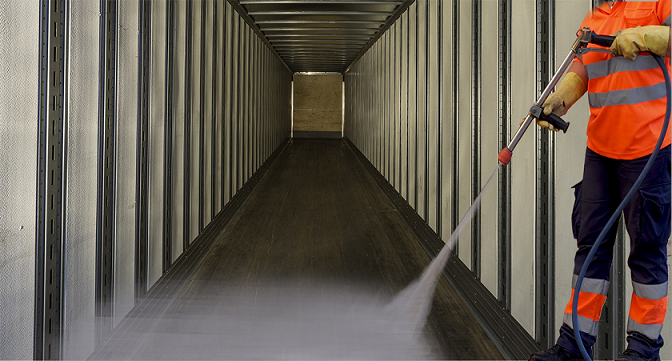
Frequently Asked Questions
How much does a semi trailer washout cost?
A commercial semi trailer washout typically costs $45 to $200 or more per trailer, depending on the level of cleaning required and the facility’s location and service tier. A basic interior washout at a truck stop chain was listed at $43.50**, while a regional wash and repair shop reported washouts at approximately **$44 to $45** . Food-grade washouts, which require documentation and stricter sanitation, commonly fall in the **$75 to $200+ range .
The cost rises with the complexity of the cleaning task. A dry van that carried palletized freight requires less labor than a livestock trailer that must have bedding and manure scraped out before washing, or a food-grade trailer that requires sanitizing and documentation for the next shipper . Fleets should request a written price schedule for each trailer type and load category rather than relying on a single posted rate.
What does the washout process involve?
A thorough semi trailer washout follows a defined sequence: remove loose debris and bedding, apply detergent, high-pressure wash with hot water, clean all interior surfaces, rinse and drain, then dry and inspect. For livestock trailers, disinfection follows drying, because disinfectants are less effective on wet or dirty surfaces .
The hot-water step is operationally significant. Professional facilities use pressure washers at 140–176 °F (60–80 °C) to dissolve organic material, road grime, and salt buildup faster and to speed drying time before disinfection . The cleaning order is top-to-bottom and front-to-back, so that dirt from the ceiling and walls does not recontaminate surfaces that have already been cleaned. Wastewater is contained and directed to a holding tank, sewer, or treatment system rather than allowed to run into storm drains .
How long does a trailer washout take?
A basic exterior wash takes 30 to 45 minutes, while a full trailer washout including scraping, washing, rinsing, and drying typically takes 1 to 2 hours . Food-grade and livestock washouts with disinfection and documentation can extend toward the upper end of that range or beyond.
The time estimate matters for fleet scheduling because driver wait time is a real cost. A washout that takes two hours at a facility with a queue can consume half a shift. Fleets with recurring washout needs should consider scheduling at loading points or negotiating appointment slots to avoid unplanned delays, and should factor driver pay into the total cost per wash rather than comparing the facility fee alone.
What are the wastewater rules for trailer washouts?
Trailer washout wastewater must be contained and directed to an approved treatment or disposal path, not discharged to storm drains, surface water, or groundwater. The specific requirements depend on the jurisdiction and the nature of the waste.
In Indiana, for example, a commercial truck-wash facility that collects wastewater in a holding tank and hauls it to a wastewater treatment plant is regulated by the state environmental agency and the health department, while a facility that discharges directly to state waters requires a permit from the water quality branch . A farm-based washout that directs wastewater to a lagoon for land application falls under a different regulatory path. The common principle across these frameworks is that wash water containing animal waste, food residue, or cleaning chemicals cannot be released untreated. Fleets operating their own washout bays should confirm the local requirements before construction, because permit issuance can take several months .
Do food-grade trailers require a different washout standard?
Food-grade trailers require a documented washout and sanitation process that meets food safety requirements, which typically means a higher cost and a more formal verification process than a standard dry van washout. The washout must remove all residue from the previous load and sanitize the interior surfaces to prevent cross-contamination of the next food shipment.
The cost range for food-grade washouts reflects this additional rigor: $80 to $200 or more per washout, with the upper end including documentation and compliance checks . Some automated washout systems designed for refrigerated and food trailers include data logging to verify that the wash was performed, which supports the shipper’s food safety documentation requirements . Fleets hauling food products should confirm that the washout provider can supply the documentation their shippers require, not just a clean trailer.
Can I reduce washout costs with an in-house facility?
An in-house washout facility can reduce the per-wash cost to approximately $25 to $75 per trailer in materials and labor, compared with $45 to $150 at a commercial truck wash . The saving comes from eliminating the facility fee and, in some cases, reducing driver wait time if the washout is performed at the fleet’s own yard.
The in-house option carries capital and compliance costs that the per-wash comparison does not capture. A washout bay requires a water supply, a containment system for wastewater, and a disposal or treatment path that satisfies the local environmental authority . The facility must also be staffed or scheduled into the maintenance team’s workload, and the wash quality must be consistent enough to satisfy shippers and inspectors. For fleets with high washout volume and a suitable yard, the in-house model can be economical; for fleets with low or irregular volume, the commercial washout remains the lower-risk choice.
Conclusion
Semi trailer washout costs come down to the trailer type and the documentation requirement: a basic dry van washout runs $45 to $50, while food-grade and livestock washouts with disinfection and compliance paperwork climb toward $200 or more. The process itself is a sequence—scrape, detergent, hot-water wash, rinse, dry, disinfect where required—and the wastewater must be contained and disposed of through an approved path. Fleets should budget washout as a per-load operating cost, confirm that the provider can supply the documentation their shippers require, and verify the local wastewater rules before building an in-house facility.