

Introduction: Solving the Industrial Agility Dilemma
In modern construction, mining, and material handling, operational managers face a persistent challenge: balancing raw power with spatial efficiency. Traditional large-scale loaders are often over-equipped for confined sites, leading to increased operational costs and reduced productivity. The 0.5 ton wheel loader emerges as the robust solution to these pain points, offering a compact footprint without compromising on core industrial capabilities. Designed for versatility, this class of machinery bridges the gap between manual labor and heavy machinery, delivering significant cost savings and operational agility. With a rated load capacity of 500 kg, these loaders are engineered for high-intensity work cycles in spaces where larger machines cannot tread.
Core Powertrain & Structural Design
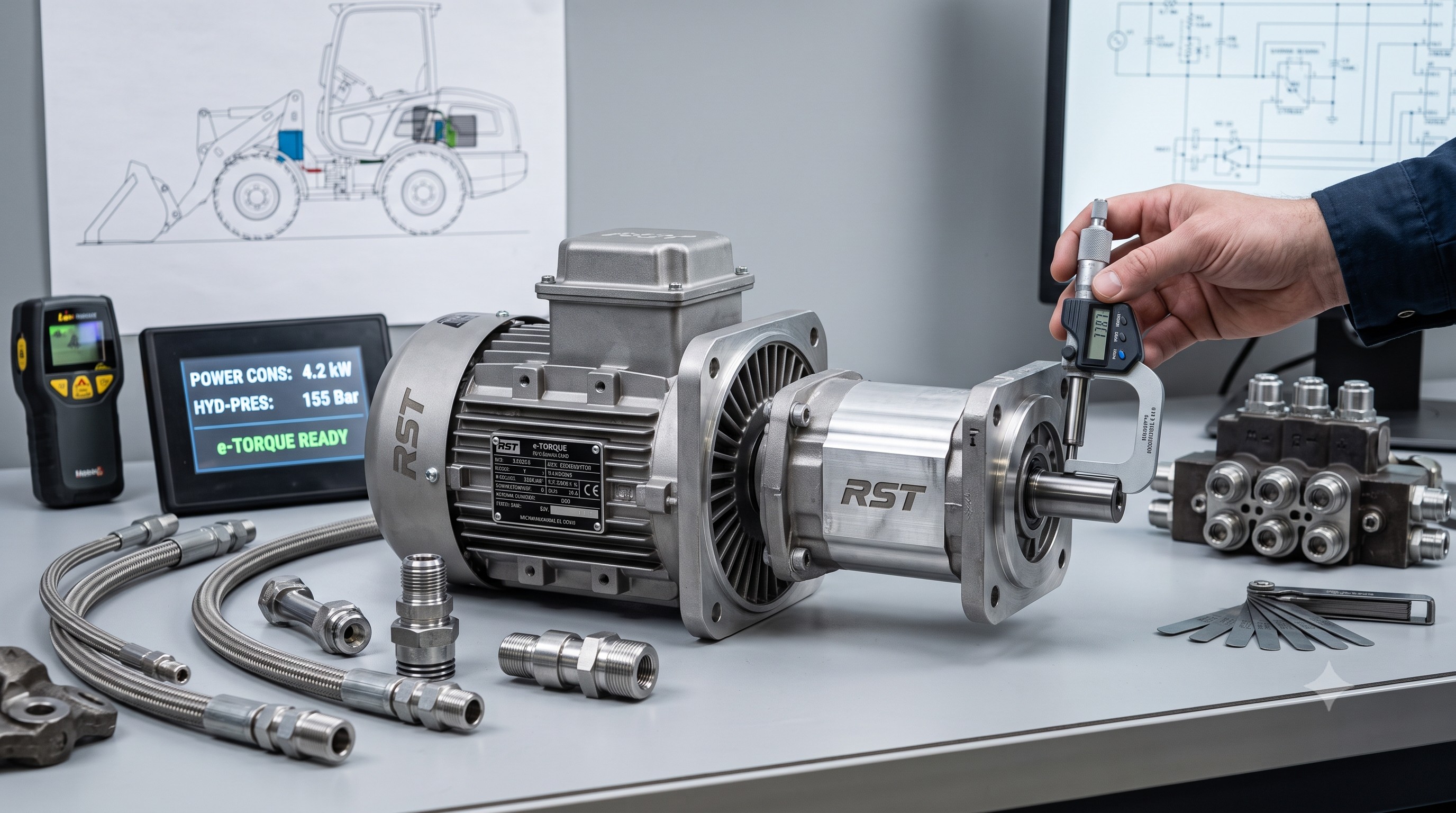
The engineering excellence of a 0.5 ton wheel loader lies in its sophisticated integration of powertrain and structural components. Unlike larger units, these compact machines often leverage advanced electric or highly efficient diesel powertrains to maximize torque while minimizing emissions. For instance, modern electric variants like the MYZG E10 are powered by an 8.4kW motor drawing from an 80V, 105Ah battery system, delivering 8.4KWH of energy . This setup facilitates instantaneous torque delivery, crucial for repeated loading cycles.
Hydraulic Systems & Performance: The working hydraulic system is the heart of the machine's operational capability. Featuring load-sensing technology and Z-bar kinematics, these systems are optimized for breakout force and cycle speed. The hydraulic pressure typically operates at high standards, with some models utilizing a 31.5 MPa main relief pressure to ensure robust lifting and dumping actions . The use of famous-brand hydraulic cylinders, pumps, and valves ensures reliability and reduces maintenance downtime .
Chassis Durability & Standards: The structural integrity of the 0.5 ton wheel loader is reinforced by heavy-duty construction using finite element analysis (FEA) to reduce stress concentrations. This ensures durability even in harsh working conditions. The chassis is designed to comply with international safety and emissions standards, including CE certification for European markets and EPA Tier 4 / EU Stage V compliance for North American and European operations. Furthermore, operator safety is paramount, with ROPS (Roll Over Protective Structure) and FOPS (Falling Object Protective Structure) certifications being standard to ensure operator safety in demanding environments . The machine’s articulation angle and wheelbase are meticulously calculated to provide superior stability, with turning radii often under 1800mm for exceptional maneuverability in tight spaces .
Technical Specifications
To provide a clear understanding of the capabilities of the 0.5 ton wheel loader, we have compiled a detailed technical specification table based on data from leading manufacturers.
| Key Parameter | Technical Specification (Based on E10 & EREL05 Models) |
|---|---|
| Rated Load Capacity | 500 kg (0.5 ton) |
| Operating Weight | 900 - 1030 kg |
| Engine / Motor Power | 8.4 kW (Electric) |
| Bucket Capacity | 0.16 - 0.2 m³ |
| Dumping Height | 1,400 - 2,100 mm |
| Dumping Reach | 460 - 550 mm |
| Turning Radius (Min.) | 1,780 - 2,000 mm |
| Overall Dimensions (LxWxH) | 3,010 x 1,080 x 2,070 mm |
| Wheelbase | 1,385 - 1,410 mm |
| Tire Size | 23 x 8.5 - 12 |
| Certifications | CE, EPA, ROPS, FOPS |
Comparative Advantage: Unmatched TCO and ROI
When evaluating heavy machinery, Total Cost of Ownership (TCO) and Return on Investment (ROI) are the ultimate metrics. The 0.5 ton wheel loader demonstrates superior performance in these areas compared to larger loaders or manual operations.
Fuel Efficiency vs. Alternatives: Small wheel loaders in this class, particularly electric variants, offer drastic reductions in fuel consumption. While conventional small diesel engines (50-100 HP) consume between 1.5 to 3 gallons per hour (6 to 11 liters/hour) , the electric 0.5 ton loader eliminates fuel costs entirely. The 8.4KWH battery system allows for cost-effective operation with significantly lower energy expenditure per working hour . This results in an immediate reduction in operational expenses.
ROI Analysis: The financial advantages extend beyond fuel. The initial capital investment for a 0.5 ton wheel loader (ranging from $4,225 to $12,540) is significantly lower than that of mid-sized loaders. Enhanced efficiency, driven by technologies like “action composite linkage” and energy recovery systems, improves working efficiency by over 10%. This translates to higher productivity per shift. By reducing battery installation requirements and maintenance costs associated with complex diesel engines, the machine delivers a faster payback period, making it an ideal investment for small to medium-sized enterprises and diversified industrial applications .
Heavy-Duty Application Scenarios
The 0.5 ton wheel loader is not confined to a single industry; its versatility allows it to perform a wide range of heavy-duty tasks across multiple sectors.
- Construction & Site Preparation: Indispensable for clearing debris, transporting bricks, sand, and gravel, and preparing job sites where space is at a premium. Its ability to load materials directly into trucks or dumpers streamlines logistics on urban construction sites .
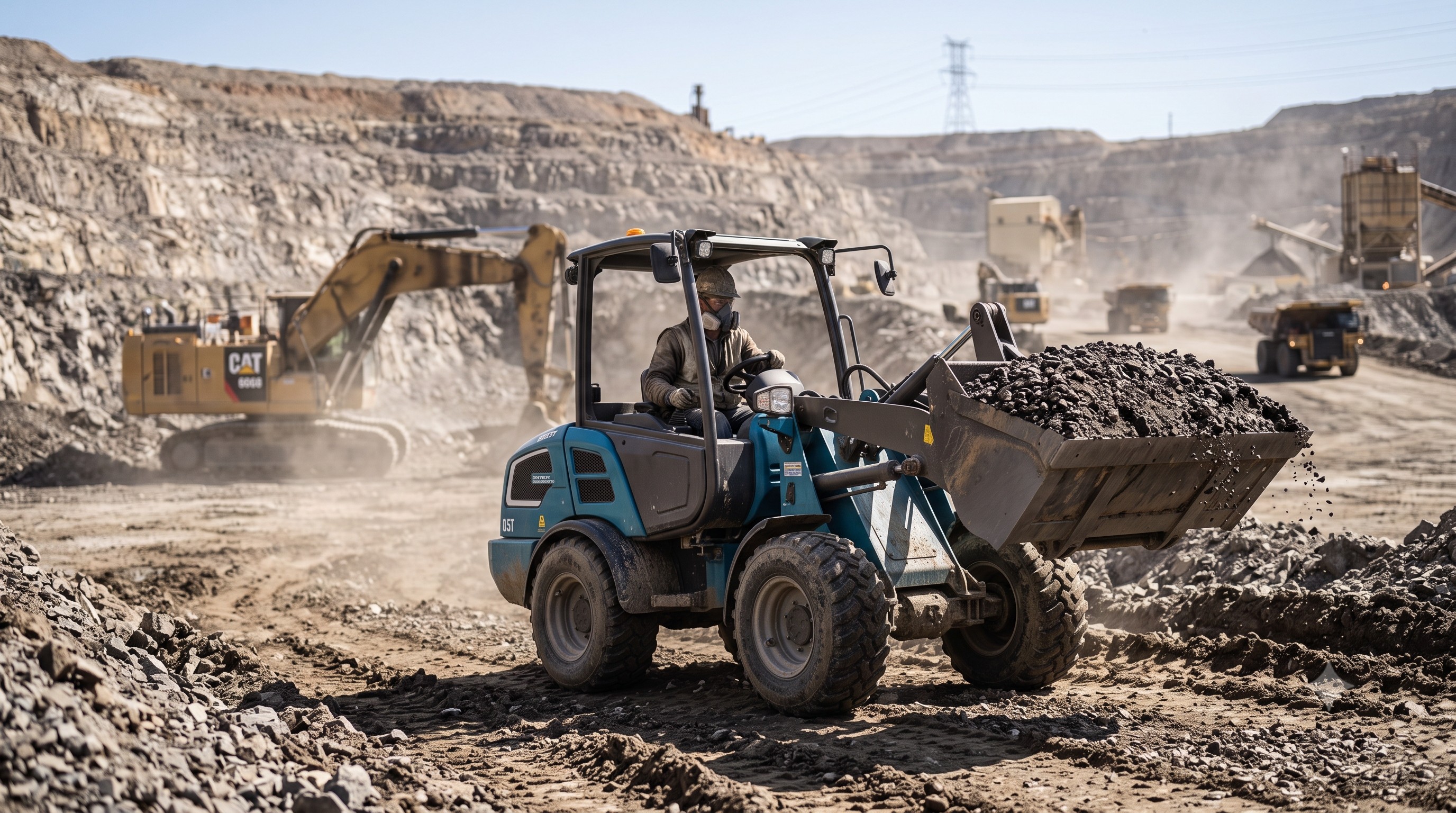
- Mining and Quarrying: In small-scale mining or quarry operations, the 0.5 ton loader is used for moving shot rock, ore, and overburden. Its high breakout force and robust chassis withstand the harsh, dusty conditions typical of these environments .
- Agriculture and Farming: Modern agriculture relies heavily on this machinery for moving feed, hay bales, handling manure, and distributing fertilizer. Its compact size allows for operation inside barns and tight farmyards, significantly reducing manual labor .
- Material Handling & Waste Management: In warehouses and recycling centers, the loader is used for stockpiling, moving pallets (with appropriate attachments), and sorting materials. Its high maneuverability ensures efficient operation in confined warehouse spaces .
- Landscaping: Used for earthmoving, grading, backfilling, and placing heavy landscaping features like boulders and trees, the 0.5 ton loader offers the power needed for precision tasks .
Conclusion: Driving the Future of Industrial Productivity
The 0.5 ton wheel loader represents a paradigm shift in industrial logistics, combining the robust engineering standards of heavy machinery with the agility required for modern, space-conscious operations. By integrating advanced electric powertrains, high-efficiency hydraulics, and adhering to stringent safety and environmental standards like ISO, CE, and EPA Tier 4, these machines deliver exceptional performance. Whether in construction, mining, agriculture, or material handling, the 0.5 ton wheel loader offers an unparalleled solution for businesses aiming to enhance productivity while reducing total cost of ownership. As industries continue to evolve towards more sustainable and efficient practices, the demand for this versatile and powerful equipment is set to grow, solidifying its role as an indispensable asset in the modern industrial landscape.