

Introduction: Addressing the Productivity vs. Cost Dilemma
Construction and industrial sectors globally are under immense pressure to optimize operational costs without compromising on equipment reliability. The proliferation of the 'factory direct mini excavator from China' represents a paradigm shift, offering a robust solution to this industry-wide challenge. Traditionally, the acquisition of compact earthmoving equipment has been plagued by high capital expenditure, expensive dealer markups, and extended lead times. However, the direct-from-manufacturer model, particularly from industrial hubs like Shandong Province, is redefining the value proposition for contractors in applications ranging from landscaping to urban infrastructure. As the sector evolves, the emphasis is no longer solely on purchase price but on total cost of ownership (TCO) and the underlying engineering integrity of the machinery .
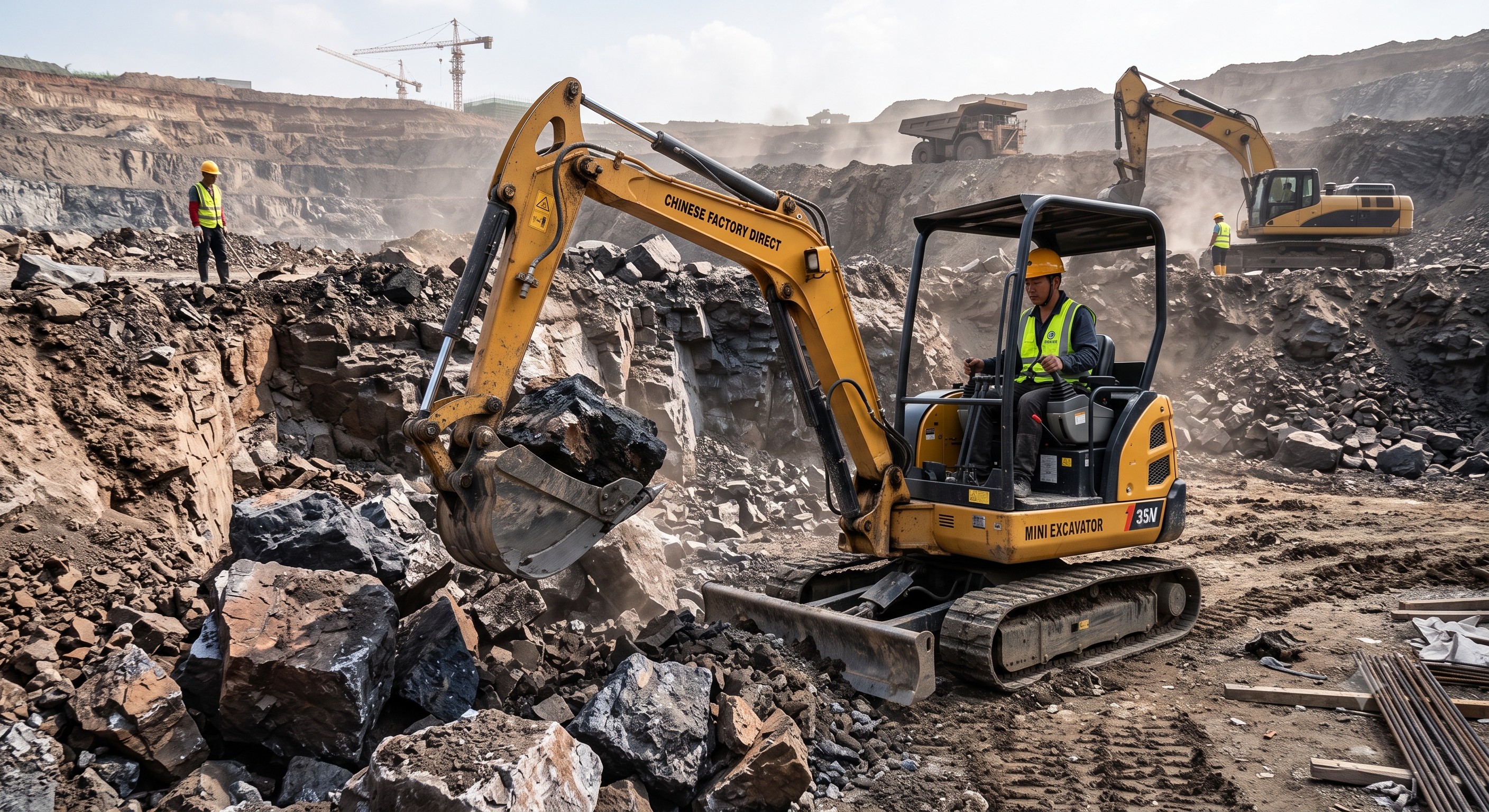
Core Powertrain & Structural Design: Engineering for Durability
The modern Chinese mini excavator is a testament to advanced manufacturing and rigorous engineering. The powertrain and structural design are critical to their performance and longevity, moving beyond the outdated perception of 'disposable' equipment.
Engine and Emissions Compliance
Leading manufacturers now equip their 1-2 ton class excavators with globally recognized engines, such as Kubota or Laidong power units, ensuring a balance of efficiency and reliability . A key differentiator for these factory-direct models is their compliance with stringent emissions standards. Many units are certified to meet U.S. EPA Tier 4 Final and EU Stage V regulations, demonstrating the integration of advanced fuel injection and after-treatment technologies . For instance, some models deliver up to 32 kW of net power, providing the torque required for heavy digging cycles .
Hydraulic System Efficiency
At the heart of these machines is a sophisticated hydraulic system. Many utilize a load-sensing hydraulic system with variable displacement piston pumps. This design, paired with high-quality components from brands like Eaton or Rexroth, ensures that hydraulic flow and pressure are precisely matched to the task, minimizing energy loss and improving fuel efficiency by up to 30% compared to conventional systems . The operating pressure typically ranges from 2,500 to over 4,000 psi, providing the necessary breakout force for demanding applications .
Undercarriage and Structural Integrity
Durability is significantly enhanced through robust structural design. The chassis and boom components undergo advanced surface treatments, including acid washing, phosphating, and shot blasting, to improve corrosion resistance and structural integrity . The use of high-strength steel in the undercarriage, combined with self-cleaning track designs, reduces wear and maintenance frequency, a crucial factor for maximizing uptime .
Technical Specifications: A Data-Driven Overview
For the discerning engineer, the technical specifications offer a clear picture of capability. The following table compiles common parameters observed in high-quality factory-direct models, meeting international standards such as ISO 9249 for power and ISO 12117-2 for ROPS/FOPS safety structures .
| Key Parameter | Typical Specification (1.5 - 2.0 Ton Class) |
|---|---|
| Engine Power | 10.2 kW - 18.6 kW (Kubota/Laidong) |
| Operating Weight | 1,100 kg - 2,000 kg |
| Bucket Capacity | 0.02 m³ - 0.03 m³ |
| Max Digging Depth | 1,735 mm - 2,000 mm |
| Hydraulic Pressure | Up to 4,134 psi |
| Emissions Standard | U.S. EPA Tier 4 / EU Stage V |
| Safety Certification | ROPS/FOPS (ISO 12117-2) |
| Max Traction Force | Up to 10,161 lbf |
Comparative Advantage: Total Cost of Ownership (TCO) and ROI Analysis
When evaluating heavy machinery, the purchase price is just one variable. The compelling advantage of factory-direct Chinese mini excavators lies in the Total Cost of Ownership (TCO) and Return on Investment (ROI).
1. Initial Acquisition Cost: The direct elimination of intermediary dealer margins and the sheer scale of production in clusters like Shandong result in prices that are disruptive, often ranging from $3,700 to under $9,000 for compact units, making entry-level models accessible to individual users and small contractors . This is significantly lower than established Western brands, which typically command a premium .
2. Fuel Efficiency: The adoption of advanced load-sensing hydraulics and efficient powertrains translates directly to lower fuel consumption. This efficiency is a key driver in reducing operating costs, with some models demonstrating lower fuel burn per cubic meter of material moved .
3. Maintenance and Support: The 'factory direct' model is evolving. Many manufacturers now offer comprehensive after-sales support, including 24/7 online video technical support, and maintain overseas parts centers for fast spare parts delivery, effectively mitigating previous concerns about long-term support . This support structure, combined with modular design for easy repairs, significantly reduces downtime.
4. Residual Value and Business Impact: The combination of low initial cost and high operational efficiency means that these machines often achieve a faster payback period, a crucial metric for cash flow management on projects . As Chinese brands continue to build a reputation for reliability, residual values are becoming more stable .
Heavy-Duty Application Scenarios
The versatility of these machines allows them to excel across various heavy-duty sectors.
- Urban Construction & Infrastructure: With operating weights as low as 1.1 tons and compact dimensions, these excavators are ideal for confined spaces, such as digging utility trenches, foundation works, and road repairs in dense urban environments where larger equipment cannot maneuver .
- Agriculture & Landscaping: The low ground pressure of the crawler tracks (as low as 4.3 psi) minimizes soil compaction, making them perfect for orchard work, vineyard maintenance, land clearing, and large-scale landscaping projects .
- Mining & Quarrying: In smaller mines and quarries, these machines are used for site cleanup, material handling, and assisting larger primary extraction equipment. Their robust construction and high digging forces ensure reliability in rugged conditions .
- Manufacturing & Warehousing: Within manufacturing plants and warehouses, mini excavators are often deployed for material handling, facility maintenance, and foundation work, offering a flexible solution for indoor and outdoor tasks .
Conclusion: The Future of Compact Earthmoving
The evolution of the factory direct mini excavator from China marks a significant milestone in the global engineering and construction industry. It represents a convergence of rigorous engineering, adherence to international standards (EPA, CE, ISO), and a disruptive business model that empowers the end-user with unprecedented value. As the industry moves towards electrification and smart automation, the foundational quality and cost-effectiveness of these machines position them as a sustainable and intelligent choice for the modern industrial workflow. Chinese manufacturers are rapidly transitioning from simply exporting products to providing integrated solutions, solidifying their role as critical partners in global infrastructure development .