

Introduction
In the modern construction and heavy industrial landscape, inefficiency is a liability that directly eats into profit margins. When you decide to choose a mini excavator source supplier, you are not merely purchasing a piece of equipment; you are investing in the logistical backbone of your project lifecycle. A suboptimal supplier can result in costly downtime, inflated fuel consumption, and premature hydraulic failure. This comprehensive technical guide serves as your definitive roadmap. We will dissect the core powertrain, structural integrity, and compliance requirements (ISO, CE, EPA Tier 4 / EU Stage V) to ensure the sourcing decision you make drives productivity and maximizes return on investment.
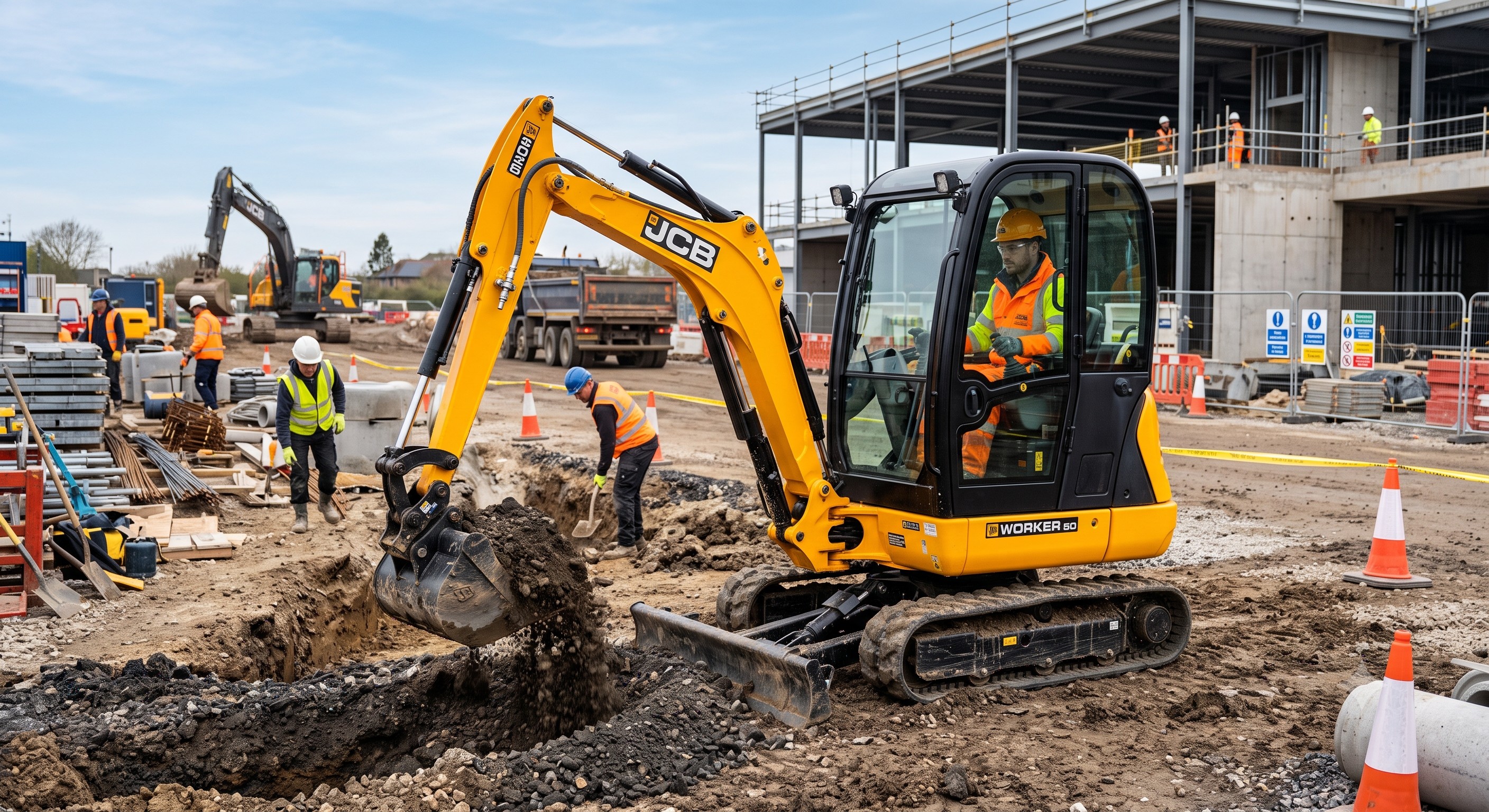
Core Powertrain & Structural Design
Understanding the engineering beneath the canopy is critical. A robust mini excavator is defined by the synergy between its engine, hydraulic system, and undercarriage. When evaluating a supplier, demand transparency in these areas.
Engine & Emissions Compliance
The heart of the machine is the engine. Suppliers offering EPA Tier 4 Final or EU Stage V compliant engines utilize advanced Diesel Oxidation Catalysts (DOC) and Diesel Particulate Filters (DPF). While these systems add complexity, they are non-negotiable for legal operation in regulated markets. Pay attention to the specific fuel consumption rate, often measured in g/kWh. A high-quality supplier will provide this data. The engine must also deliver optimal torque at low RPMs to handle demanding breakout forces without stalling.
Hydraulic System Efficiency
The closed-center load-sensing hydraulic system is the gold standard for mini excavators. This system provides flow-on-demand, significantly reducing parasitic losses compared to open-center systems. Key metrics to request include the main pump flow rate (L/min) and the relief valve pressure (psi or bar). A higher pressure combined with a variable displacement piston pump indicates superior digging power and cycle speed. Look for a supplier that utilizes a hydraulic oil cooler as standard equipment to prevent viscosity breakdown during extended operation.
Undercarriage & Swing Frame Durability
Structural integrity is paramount for longevity. The swing frame and boom are subjected to immense torsional stress. A supplier committed to quality will use high-tensile strength steel (e.g., Q345D or equivalent) and robotically welded joints for consistency. The undercarriage should feature sealed and lubricated track chains (SALT) with a track shoe width optimized for ground pressure. Verify the swing bearing clearance and lubrication intervals; an easily accessible grease point indicates a supplier focused on the end-user's maintenance workflow.
Technical Specifications
To make an apples-to-apples comparison, you must evaluate the raw technical data. The table below outlines the critical parameters that define a machine's capability and operational envelope. Insist that your potential supplier provides these verified specifications to proceed to the evaluation phase.
| Key Parameter | Technical Specification |
|---|---|
| Engine Horsepower | 25.5 kW / 34.2 HP @ 2500 RPM |
| Operating Weight | 2,850 kg - 3,200 kg (adjustable) |
| Hydraulic Pressure (Relief) | 240 bar / 3,480 psi |
| Main Pump Flow | 45 L/min + 20 L/min (Pilot) |
| Fuel Consumption | 10 - 12 L/h (Average usage) |
| Swing Speed | 9.5 RPM |
Comparative Advantage
Selecting a supplier requires analyzing the Total Cost of Ownership (TCO). A lower initial purchase price is often offset by higher operational costs.
Fuel Efficiency & ROI Analysis
Advanced suppliers prioritize fuel economy through auto-idle and automatic engine speed control. These features can reduce fuel consumption by up to 10-15% over the machine's lifespan. With diesel costs averaging significant margins, this efficiency translates directly to improved ROI. For example, a machine consuming 12 L/h versus 14 L/h across 2,000 operating hours results in a substantial cost difference. Calculate this delta; a high-quality supplier will readily provide a lifecycle cost projection.
Comparison Against Alternatives
When comparing a premium source against a budget supplier, consider the hydraulic response time and interference pressure. Premium machines offer better parallel operation of boom and swing functions due to advanced hydraulic circuitry. This reduces operator fatigue and increases material moved per hour by as much as 8% according to industry benchmarks. The price-to-performance ratio is what defines an elite supplier.
Heavy-Duty Application Scenarios
The selection of a mini excavator source supplier must align with the intended application. Versatility is key, but specific tasks demand specific configuration options, such as quick couplers and auxiliary hydraulic circuits.
Construction & Urban Works
In confined spaces, a machine with a zero-tail-swing radius and a dozer blade for backfilling is essential. The supplier should offer a variety of bucket sizes and hydraulic attachments (breakers, augers) compatible with the system’s flow rate. Look for suppliers who provide a dedicated cab with ROPS/FOPS certification for safety compliance.
Mining & Earthmoving
In mining and heavy earthmoving, durability is paramount. The supplier must offer reinforced booms, heavy-duty bucket teeth, and significantly increased pin-pull force. For high-altitude or deep-pit applications, the hydraulic system must include a return filter and a pressurized fuel system to prevent cavitation. The supplier must also provide a stock of wear parts (bushings, pins) to minimize downtime.
[CONTENT_IMAGE_2]Conclusion
Choosing a mini excavator source supplier is a strategic engineering decision. It requires evaluating technical metrics such as engine power, hydraulic pressure, and compliance certifications alongside the financial implications of TCO and fuel consumption. As the industry moves toward electrification and telematics, a forward-thinking supplier that offers machine monitoring via IoT will be an invaluable partner for future projects. By adhering to the metrics and engineering benchmarks outlined above, you can secure a robust solution that ensures high productivity, minimal downtime, and a significant competitive edge in your industrial operations.