

Introduction: The Compact Powerhouse for Confined Operations
In modern construction, landscaping, and utility work, the challenge is often not the scale of the task, but the accessibility of the site. The 1 ton mini excavator has emerged as the robust solution to these spatial constraints, offering surprising digging power within a footprint that can navigate standard doorways and garden gates. As procurement professionals and contractors evaluate their equipment fleet, understanding the technical nuances of these compact machines is crucial. This guide provides a deep dive into the engineering, specifications, and procurement strategies for 1-ton mini excavators, ensuring you make an informed investment that maximizes your return on investment and operational efficiency.
Core Powertrain & Structural Design
The performance and longevity of a 1-ton mini excavator are dictated by the quality of its core components. The powertrain, hydraulic system, and undercarriage form the backbone of the machine, with each element requiring rigorous evaluation.
Engine and Emissions Compliance
The engine is the heart of the excavator. Typically, these machines are powered by diesel engines in the 8-13.5 HP range, with some models offering gasoline options like the Briggs & Stratton engine found in certain units . For global markets, compliance with emissions regulations is non-negotiable. Buyers must verify that the engine meets EPA Tier 4 or EU Stage V standards to ensure legality and operational viability in regulated regions . Leading manufacturers often source reliable engines from brands like Kubota or Yanmar, which are renowned for their durability, while cost-effective models may feature Chinese engines like Koop or Changchai .
Hydraulic System Performance
The hydraulic system translates engine power into digging force and precise movements. A reliable system, operating at pressures around 19 MPa as seen in some models, ensures efficient operation of the boom, arm, bucket, and swing mechanism . Key components to evaluate include the gear or piston pump and the main control valve. For heavy-duty applications, ensure the auxiliary hydraulic lines support attachments like hydraulic breakers or augers, which are critical for versatility . The use of well-regarded hydraulic components, such as those from Parker, is a strong indicator of quality .
Chassis and Undercarriage Durability
The structural integrity of the excavator is paramount for safety and longevity. The chassis and undercarriage must withstand the stresses of digging and rough terrain. Rubber tracks are standard on 1-ton machines, providing low ground pressure (e.g., 21 kPa) and minimizing damage to paved surfaces . Evaluating the track tension system, the quality of welds on the boom, and the robustness of the slew ring is essential. Compliance with safety standards like ROPS/FOPS (Roll-Over Protective Structure / Falling Object Protective Structure) is a critical safety requirement .
Technical Specifications: A Data-Driven Comparison
For a rigorous evaluation, procurement must rely on verifiable data. The table below provides a consolidated overview of the key technical specifications for a typical high-quality 1-ton mini excavator, standardizing the metrics you will encounter in supplier datasheets.
Refer to the detailed specifications below:
| Key Parameter | Technical Specification (Typical Value) |
|---|---|
| Operating Weight | ~1000 kg (800-1200 kg range) |
| Engine Horsepower | 8-13.5 HP / 9.92 kW |
| Engine Displacement | 420 cc |
| Hydraulic Working Pressure | 19 MPa |
| Bucket Capacity | 0.025 - 0.04 m³ |
| Max Digging Depth | ~1.76 m (up to 2.2 m) |
| Max Digging Height | ~2.78 m |
| Ground Pressure | ~21 kPa |
| Travel Speed | ~2.2 km/h |
| Fuel Tank Capacity | ~6.6 L |
Comparative Advantage: TCO, Fuel Efficiency, and ROI Analysis
While the initial purchase price is a primary consideration, the Total Cost of Ownership (TCO) provides a more accurate financial picture. A 1-ton mini excavator offers significant cost advantages over larger machinery, primarily through exceptional fuel efficiency and reduced maintenance costs.
For instance, the fuel consumption of these compact units is minimal due to their small engine displacement (e.g., 420 cc) and low fuel tank capacity (e.g., 6.6 L) . This translates to lower daily operating costs. Furthermore, the price point of these machines is a major differentiator. Chinese suppliers offer units in the USD 3,000 - 6,000 range, which can be up to 40% lower than big-brand alternatives . When paired with a supplier evaluation framework that prioritizes on-time delivery (>99%) and quality components (Kubota/Parker), the ROI is exceptionally compelling for small-to-medium contractors and fleet owners .
Heavy-Duty Application Scenarios
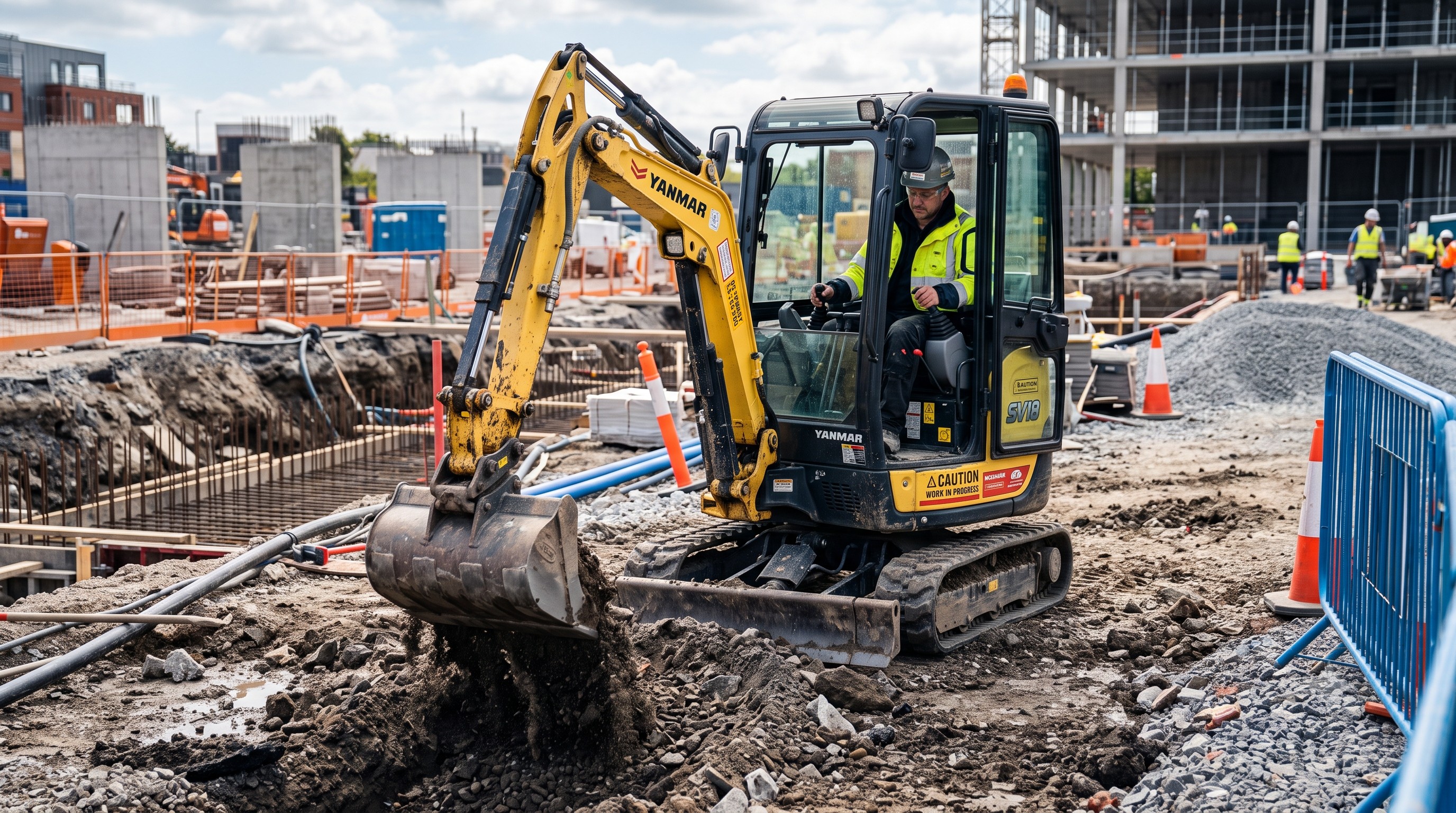
The 1-ton mini excavator is not just for gardening; it is a viable heavy-duty tool for a variety of demanding applications. Its versatility is unmatched in confined environments.
[CONTENT_IMAGE_2]
- Urban Construction and Utility Work: Digging trenches for cables, water pipes, and drainage systems in tight city streets where larger equipment cannot fit.
- Light Demolition and Material Handling: Using hydraulic breakers for small-scale demolition of concrete or asphalt, and loading debris into small trucks or trailers.
- Mining and Earthmoving Support: Performing excavation, backfilling, and site preparation tasks in support of larger mining operations, including work in underground galleries or processing plants.
- Agriculture and Landscaping: Ditch cleaning, tree planting, pond excavation, and landscaping in orchards, greenhouses, and nurseries .
Conclusion: Securing Your Industrial Productivity
The strategic acquisition of a 1-ton mini excavator is a forward-looking decision for any operation facing spatial constraints. By moving beyond simple price comparisons and delving into core engineering—engine certification, hydraulic integrity, and structural durability—buyers can secure machinery that delivers consistent performance and rapid payback. As the market evolves with global suppliers, the key to success lies in rigorous supplier vetting, compliance verification, and a clear understanding of your operational requirements. Investing in the right machine ensures you are equipped to handle the challenges of modern, compact worksites with efficiency and confidence.