

Introduction: Addressing the Productivity Paradox in Modern Construction
Across job sites, from congested urban developments to sprawling mining operations, a persistent challenge remains: how to achieve maximum material handling throughput with minimal machine footprint. The solution is the compact wheel loader. This workhorse is engineered to deliver high performance and robust maneuverability, effectively bridging the gap between skid-steer loaders and larger, less agile machines . As a lead mechanical engineer, I recognize that the modern compact wheel loader is far more than a reduced-scale front-end loader; it represents a sophisticated integration of advanced powertrain technology, high-efficiency hydraulics, and durable structural design. The global market for these machines is projected to grow from USD 6.8 Billion in 2024 to USD 11.4 Billion by 2031, a testament to their increasing indispensability in heavy industry .
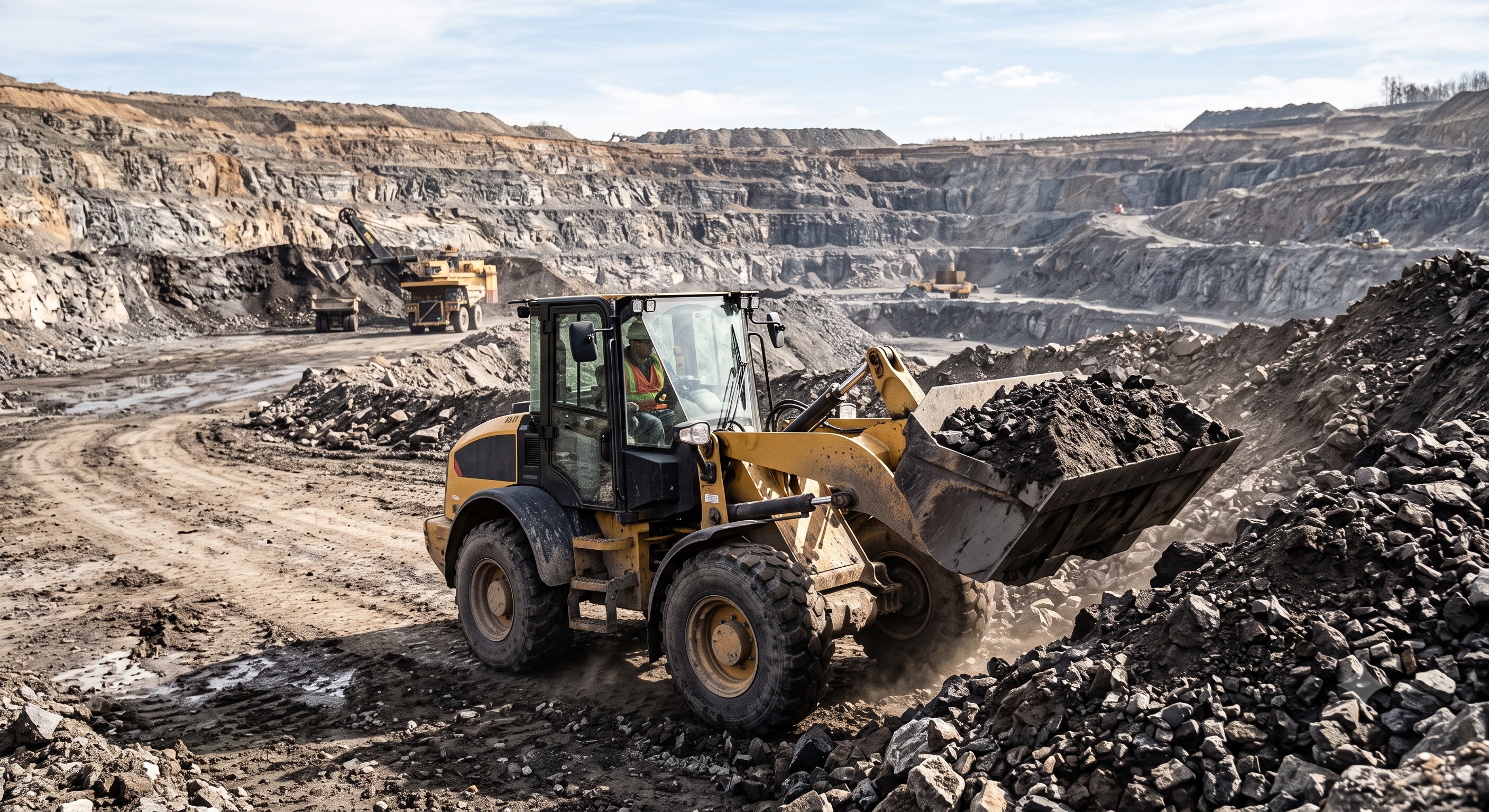
Core Powertrain & Structural Design
The engineering philosophy behind a premium compact wheel loader centers on optimizing the synergy between the engine, hydraulic system, and chassis to deliver superior performance, fuel efficiency, and durability.
Engine Technology & Emissions Compliance
Modern compact wheel loaders are powered by advanced, low-emission diesel engines. For instance, the New Holland C Series features an in-house developed FPT Industrial F5H 3.4-liter 4-cylinder engine that complies with stringent EPA Tier 4 Final / EU Stage V emissions standards . Caterpillar's 903 model utilizes the Cat C1.7 engine, also meeting Tier 4 Final requirements . These engines utilize advanced fuel atomization and after-treatment systems, such as a Diesel Oxidation Catalyst (DOC), to meet emissions without requiring Diesel Exhaust Fluid (DEF) or complex regeneration cycles, significantly reducing total cost of ownership .
Hydrostatic Transmission & Control Systems
The hallmark of a modern compact wheel loader is its hydrostatic transmission (HST), which provides infinitely variable speed control and exceptional efficiency. The system uses a variable-displacement hydraulic pump to drive fixed-displacement wheel motors. In normal operation, a demand lever (accelerator pedal) controls engine speed, which in turn modulates pilot pressure to adjust the pump's swashplate, varying the transmission ratio . This configuration allows operators to maximize fuel efficiency. Features like Caterpillar's throttle lock allow the operator to set engine RPM, removing the need to keep the right foot on the pedal, while the inching pedal provides precise speed control at high engine RPMs for maximum hydraulic performance . Advanced models also feature a 'creeper mode', which maintains constant high engine speed for powering attachments while using the demand lever to independently control ground speed via the transmission ratio .
Chassis and Driveline Durability
The structural integrity of a compact wheel loader is paramount for longevity. These machines typically feature a robust, rigid frame, with durability enhanced by heavy-duty axles from manufacturers like Carraro and Dana . Features such as a rear axle oscillation of up to 20 degrees ensure all four wheels maintain ground contact on uneven terrain, improving stability and load retention . The Z-bar linkage design is common for the loader arms, providing high breakout force and effective load-and-carry capabilities . The cab is ROPS (ISO 3471:2008) and FOPS (ISO 3449:2005 Level II) certified, ensuring operator safety .
Technical Specifications
The technical data below illustrates the capability of a typical modern compact wheel loader. These parameters are critical for evaluating machine performance and suitability for specific tasks .
| Key Parameter | Technical Specification | ||||||||||||||||||||||||||||
|---|---|---|---|---|---|---|---|---|---|---|---|---|---|---|---|---|---|---|---|---|---|---|---|---|---|---|---|---|---|
| Engine Gross Horsepower | 48 - 64 hp (36 - 48 kW) | ||||||||||||||||||||||||||||
| Engine Displacement | 1.7 - 3.4 Liters | ||||||||||||||||||||||||||||
| Emissions Standard | EPA Tier 4 Final / EU Stage V | ||||||||||||||||||||||||||||
| Operating Weight | 9,200 - 11,904 lbs (4,173 - 5,400 kg) | ||||||||||||||||||||||||||||
| Hinge Pin Height | ~10 ft (3,182 mm) | ||||||||||||||||||||||||||||
| Dump Height | ~8 - 9.5 ft (2.4 - 2.9 m) | ||||||||||||||||||||||||||||
| Breakout Force | 6,300 - 6,500 lbf | ||||||||||||||||||||||||||||
| M | a | i | n | R | e | l | i | e | f | H | y | d | r | a | u | l | i | c | P | r | e | s | s | u | r | e | |||
| ~ | 3 | , | 3 | 3 | 6 | p | s | i | ( | 2 | 3 | 0 | b | a | r | ) |
Comparative Advantage: TCO, Fuel Efficiency, and ROI Analysis
When evaluating heavy equipment, the Total Cost of Ownership (TCO) is a critical metric. A compact wheel loader often presents a superior ROI compared to alternatives like skid-steer loaders (SSL) or compact track loaders (CTL).
Superior Fuel Efficiency
Compact wheel loaders are inherently more fuel-efficient. Their articulating steering allows tires to follow a smooth path, reducing rolling resistance and tire wear compared to the skid-steer turning of an SSL . This efficiency is enhanced by advanced transmission systems. For instance, the ability to use a throttle lock to maintain optimal engine RPM regardless of ground speed is a significant fuel-saving feature . Operators also achieve higher productivity per pass, as a compact wheel loader typically has a larger bucket capacity and higher rated operating capacity than an SSL with similar horsepower . The market is also seeing a shift toward electrified drivetrains for even greater sustainability and efficiency, such as Carraro's 'THE' (Transmission Hydrostatic Electric) concept .
Reduced Tire Wear and Operational Costs
As mentioned, the articulating design drastically reduces tire scrubbing and wear, a major expense in material handling. Features like rimpull control limit tire spin when engaging piles, further extending tire life and reducing fuel consumption . The overall design focuses on low owning and operating costs, with many manufacturers offering maintenance-free emissions solutions and extended service intervals .
Heavy-Duty Application Scenarios
The compact wheel loader's versatility makes it essential across a wide range of heavy-duty applications .
- Construction & Earthmoving: Excavation, site preparation, backfilling, grading, and lifting heavy materials. The Z-bar linkage provides high breakout force for tough digging, while the high dump height allows for efficient truck loading .
- Mining & Quarrying: Efficiently moving aggregate, ore, and overburden in tight spaces, such as stockpile management and hopper feeding.
- Material Handling & Industrial: Loading and unloading palletized goods, managing scrap metal, and moving waste in manufacturing facilities and recycling centers. The ability to accept a wide range of attachments (forks, grapples, sweepers) makes them indispensable .
- Forestry & Agriculture: Handling bales, moving feed and manure, and general yard maintenance.
Conclusion: The Future of Industrial Productivity
The compact wheel loader represents the pinnacle of adaptability and efficiency in the heavy machinery sector. By integrating high-output, low-emission engines with advanced hydrostatic drivetrains and durable structural components, these machines deliver unparalleled productivity in a streamlined package. The result is a significant reduction in total cost of ownership through enhanced fuel efficiency, reduced tire wear, and lower maintenance requirements. As construction and mining operations demand more sustainable and cost-effective solutions, the sophisticated engineering of the compact wheel loader positions it as an indispensable asset for maximizing industrial productivity and profitability.