

Introduction: The Productivity Imperative in Quarry Operations
In the high-stakes world of quarrying and mining, production metrics are the lifeblood of project viability. The question of daily output transcends simple curiosity; it is a fundamental determinant of profitability, logistical planning, and operational success. For a Crawler Excavator operating in these harsh, abrasive environments, daily output is not a fixed number but a complex variable influenced by machine size, material density, bucket capacity, and operator efficiency. This blog delves deep into the technical and operational factors that define the daily output of a crawler excavator, providing a data-driven analysis for industry professionals.
Understanding what truly constitutes a high-yield day requires moving beyond basic specifications to analyze real-world performance and the advanced engineering that drives productivity.
Core Powertrain & Structural Design: The Heart of Quarry Production
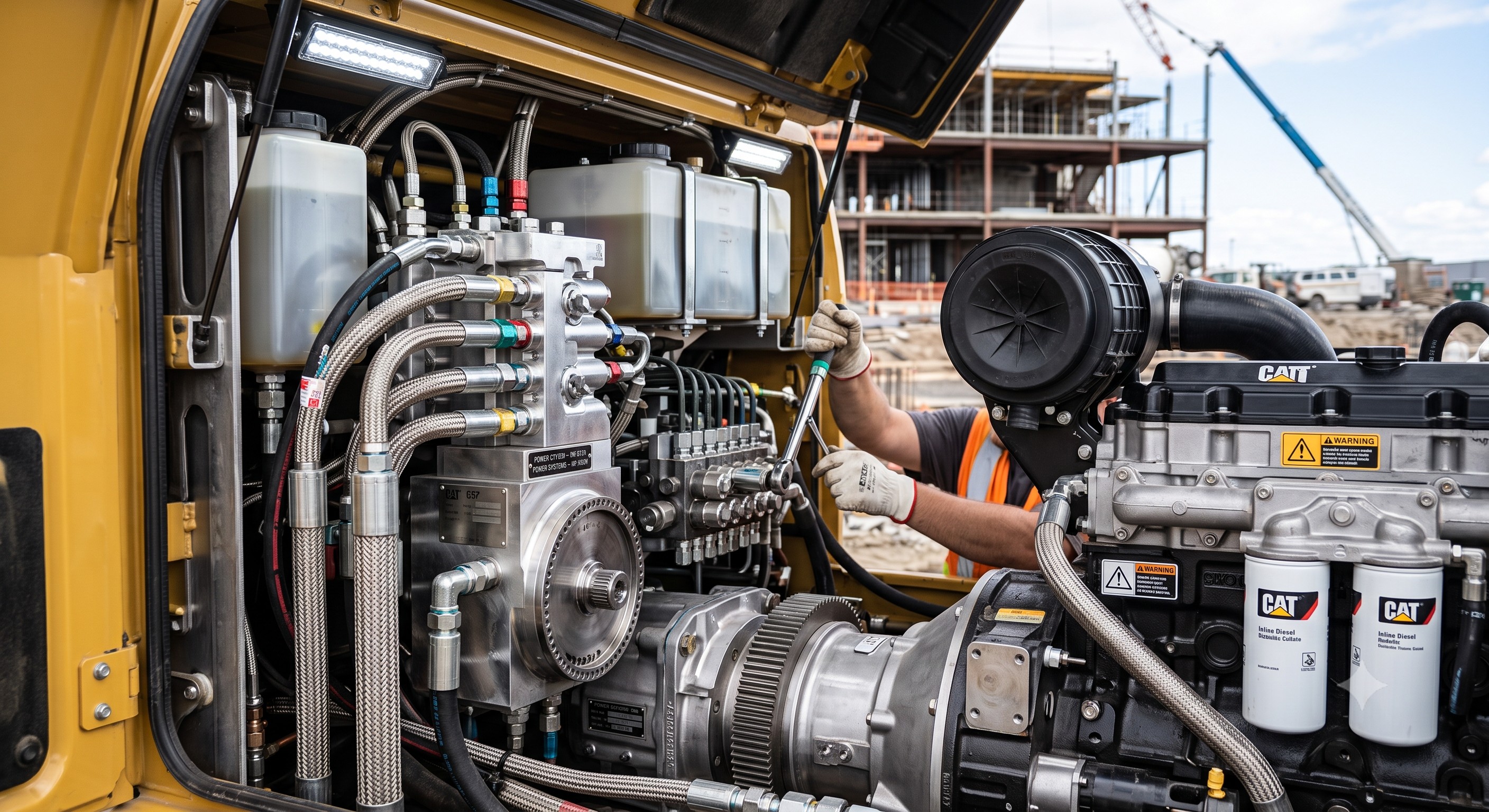
The daily output of a Crawler Excavator is directly tied to its core engineering, designed to withstand the rigors of continuous heavy-duty service. The powertrain, hydraulics, and chassis are engineered for maximum throughput under intense stress.
The Powertrain and Hydraulic System
Advanced electro-hydraulic systems provide the intelligence to maximize output while managing fuel consumption. For instance, the Volvo EC530EL boasts a next-generation system with independent metering valve technology, delivering a remarkable 25% improvement in fuel efficiency over previous models . Similarly, the Liebherr R 992 features the proprietary Liebherr Power Efficiency (LPE) system, which continuously adjusts engine speed and hydraulic oil flow to match each stage of the digging cycle, resulting in fuel consumption of less than 60 litres per hour . This focus on efficiency directly impacts profitability by lowering the total cost of ownership.
Chassis and Undercarriage Durability
Quarry environments are notoriously punishing on equipment. To ensure high availability and a long service life, manufacturers reinforce critical structures. The Liebherr R 992 features a welded structure with cast steel components and a heavy-duty undercarriage, designed to provide the stability and durability needed for hard rock excavation . The Volvo EC530EL also features a super-rigid, reinforced undercarriage and robust upper/lower frames, providing the strength expected from a much larger excavator . These design choices are not just for durability; they ensure the machine can deliver consistent daily output without frequent breakdowns.
Technical Specifications
While daily output is a measure of productivity, it is underpinned by core technical specifications. The table below illustrates the wide range of capabilities available in modern crawler excavators.
| Key Parameter | Technical Specification |
|---|---|
| Model | Volvo EC530EL |
| Engine Horsepower | 456 hp (gross) |
| Operating Weight | 120,000 - 124,100 lbs |
| Bucket Capacity | 3.14 - 6 yd³ |
| Fuel Efficiency Improvement | Up to 25% over previous models |
| Breakout Force (Boost) | 60,500 lbf |
Comparative Advantage: The Economic Impact of High Daily Output
Investing in a high-performance Crawler Excavator is a strategic decision where the daily output directly influences the total cost of ownership and return on investment. A machine that moves more material per day can significantly reduce operational costs, even with a higher initial purchase price. The fuel savings from systems like the Volvo or Liebherr's LPE system contribute directly to a lower cost-per-tonne metric . For example, the ability of the R 992 to load a 40-tonne articulated dump truck in just three passes showcases its high breakout force and operational efficiency, minimizing cycle times and maximizing hourly throughput . Furthermore, advanced operator assistance systems like Liebherr's Bucket Fill Assist (BFA) improve bucket fill factors and reduce cycle times, leading to higher daily production volumes and faster return on investment .
Heavy-Duty Application Scenarios
The daily output of a crawler excavator becomes a tangible reality in specific application scenarios, where its design and power are put to the test.
Hard Rock Mining and Quarrying
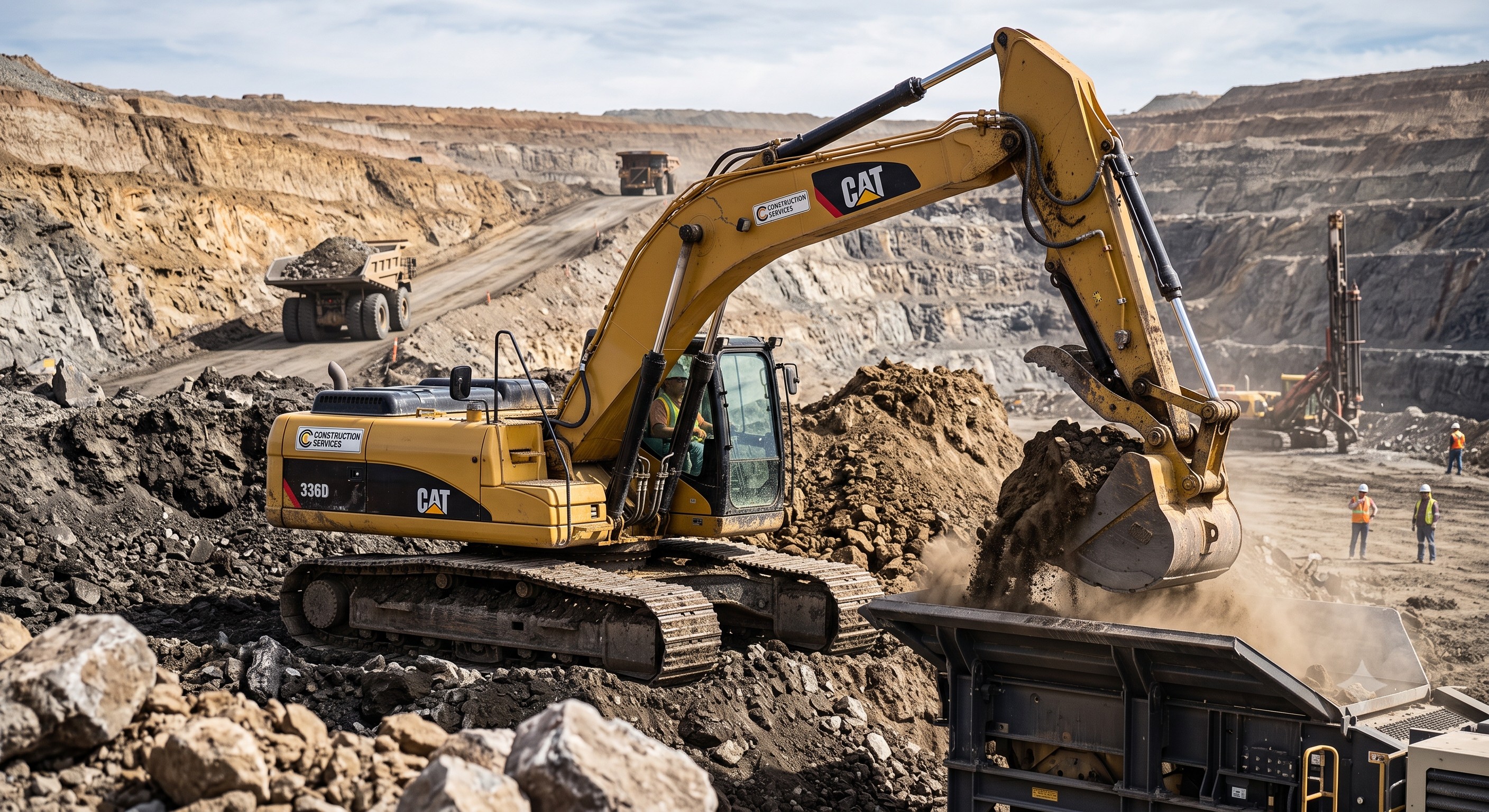
In the most demanding quarries, massive machines are deployed for primary extraction. The Liebherr R 992, with an operating weight of 94 tonnes, is engineered for such conditions. It is used to load dense and abrasive rock materials weighing up to 2.2 tonnes per cubic metre, achieving high daily outputs . A case study at Holcim UK's Lee Moor quarry saw a 23-tonne excavator fitted with autonomous technology move an average of 1,500 tonnes of material daily over a two-day trial, achieving an impressive 133 cycles per hour . This demonstrates the potential for automation to push daily output boundaries.
High-Volume Earthmoving and Bulk Excavation
For large-scale site preparation and mass excavation, machines like the Volvo EC530EL are proving their mettle. Volvo designed this 50-tonne excavator for heavy-duty digging, and real-world feedback indicates it can increase productivity by up to 20% in some applications, matching the performance of many 60-tonne excavators . Its speed and capacity make it an ideal partner for 30-40 tonne haulers, significantly boosting daily material movement.
Conclusion
The daily output of a Crawler Excavator in a quarry is a testament to advanced engineering, strategic design, and the relentless pursuit of efficiency. From the 23-tonne class achieving over 1,500 tonnes per day to the 94-tonne giants loading 40-tonne trucks in three passes, the numbers paint a clear picture of industrial capability . For quarry operators, the choice of machine is a strategic decision with direct implications for profitability. As technology continues to evolve with enhanced operator assistance and autonomous systems, the potential for even greater daily output is clear, pushing the boundaries of what is possible in heavy industry .