

Introduction: The High-Stakes Economics of Quarry Loading
In the competitive world of aggregate production, the efficiency of the loading phase is a critical determinant of overall plant profitability . A poorly planned excavating and loading strategy can halt production, increase costs, and erode margins. While standard construction excavators are versatile, dedicated quarrying and mining operations demand a machine built for extreme, continuous duty. The question is, what fundamentally separates a standard earthmover from a purpose-built quarry excavator? The answer lies in a holistic engineering approach focused on durability, breakout force, and optimized Total Cost of Ownership (TCO). This article dissects the core technological differentiators, from the powertrain to the undercarriage, that make these machines the workhorses of the modern quarry.
Core Powertrain & Structural Design: Built for Brutality
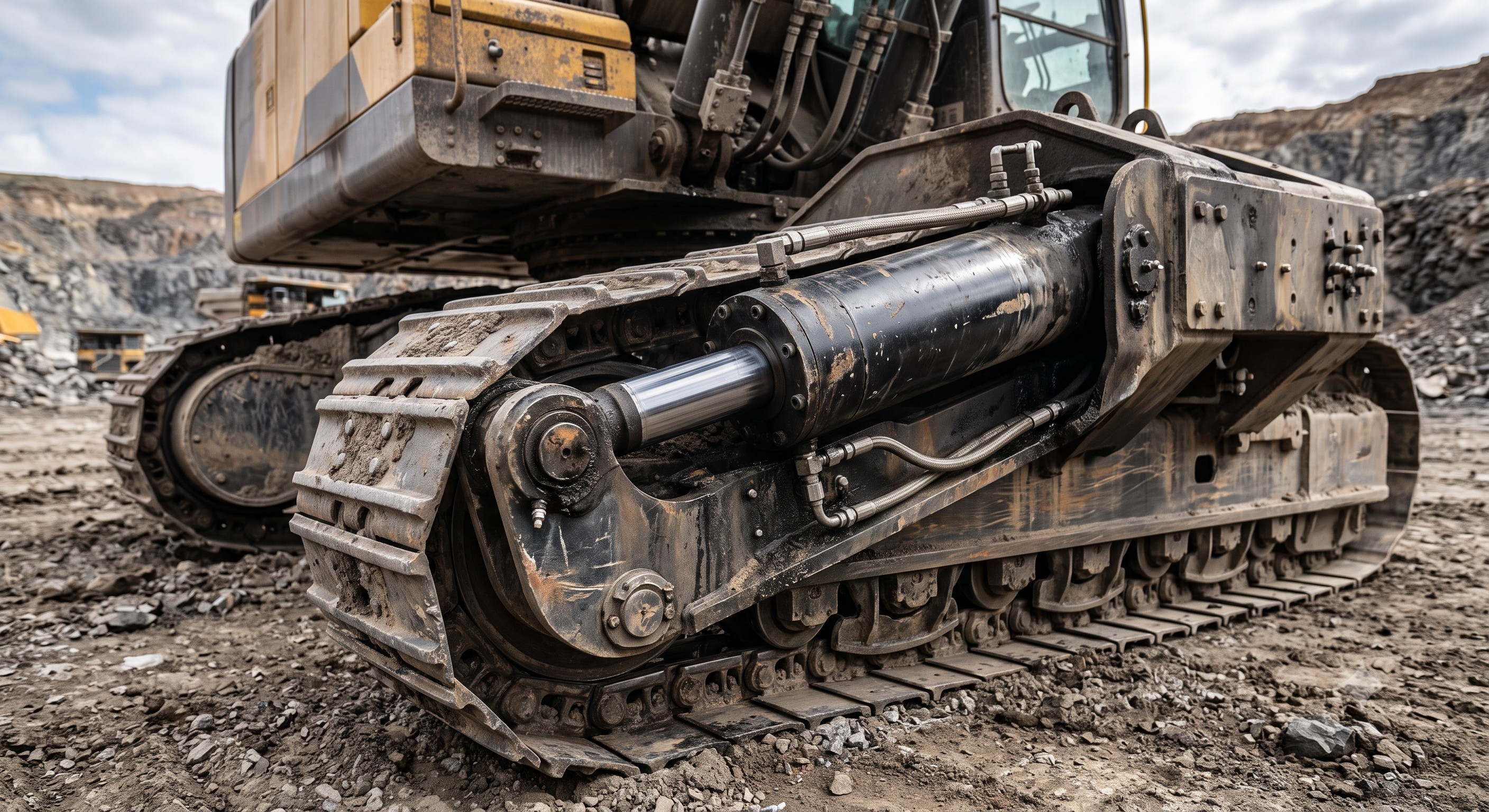
The lifecycle of a quarry excavator is defined by high-impact loading and abrasive materials. This environment dictates a design philosophy centered on extreme durability and sustained power delivery. Unlike a general-purpose machine, a quarry excavator must withstand constant shock loads and high swing torque, maximizing uptime and minimizing maintenance.
The Heavy-Duty Undercarriage
The foundation of a quarry excavator is its undercarriage. Heavy-duty machines feature a longer, heavier undercarriage to provide the stability required for lifting and swinging heavy payloads . For instance, the Cat 325 HD variant includes an oversized undercarriage and a heavier counterweight to enhance stability when using heavy work tools . Advanced track frames in the 80-tonne class are engineered using topology optimization techniques to ensure structural integrity, often utilizing high-strength, lightweight lattice designs to support massive upper-body weight and dynamic loads .
High-Pressure Hydraulics and Powertrain
Quarry applications require immense hydraulic power and precise control. The powertrain integrates a high-torque engine with a sophisticated hydraulic system, often employing dual-pump designs and load-sensing control (LSC) systems for energy efficiency and precise distribution . For example, the 80-tonne Kobelco SK850LC features a 12.9-liter turbocharged engine delivering 380 kW, paired with a robust hydraulic system providing a maximum pump flow of 504 L/min to generate powerful breakout and arm crowding forces . Similarly, the Volvo EC950F boasts an operating weight exceeding 91 tonnes and is engineered to deliver superior productivity, combining robust digging force with intelligent hydraulic performance to ensure faster cycle times .
Safety and Compliance Standards
Operator safety is paramount, particularly in the high-risk quarry environment. Modern machines are built to stringent international safety standards. This includes ROPS/FOPS (Rollover Protective Structure / Falling Object Protective Structure) certified cabs, meeting standards like ISO 12117-2:2008 . Many are also engineered to comply with stringent emission regulations such as EPA Tier 4 or EU Stage V, utilizing advanced engine management systems to balance power with environmental responsibility .
Technical Specifications: Decoding the Quarry Machine
To illustrate the capabilities of a true quarry-class excavator, the following table presents key specifications. These metrics are the language of procurement and operational planning, defining a machine's suitability for high-production loading.
| Key Parameter | Technical Specification |
|---|---|
| Engine Horsepower (Gross) | 380 kW - 1,450 kW (Typical for 80-360 Tonne Class) |
| Operating Weight | 80,800 kg - 362,000 kg |
| Max. Bucket Capacity | 3.90 m³ - 23.0 m³ |
| Breakout Force (SAE J1179 / ISO 6015) | 403 kN - 1,200 kN |
| Max. Pump Hydraulic Flow | 504 L/min per pump |
| Fuel Tank Capacity | 960 L - 1,500 L+ |
Comparative Advantage: Why the Quarry Excavator Wins
When evaluating loading tools for an aggregate operation, the choice often comes down to a hydraulic quarry excavator versus a wheel loader. While both have roles, the excavator offers distinct advantages in hard rock conditions .
Superior Digging Power and Cycle Times
Excavators provide significantly greater digging force than wheel loaders of a similar class due to their ability to apply force through a single point of contact. This makes them superior for penetrating muckpiles of shot rock or loading fractured materials directly from the face . In tight quarries, the excavator's ability to work in tight loading areas and attack material from a stationary position often results in faster cycle times . Furthermore, excavators can load trucks positioned on the same bench or below, eliminating the time wasted by loaders raising the boom to reach truck beds .
Operational Flexibility and Safety
Quarry contractors often prefer excavators because they are versatile and can handle rapidly changing material conditions, from shot rock to mud . From a safety perspective, the stationary nature of the excavator during loading reduces the risks associated with constant backing up, a primary hazard for wheel loaders . The elevated cab also offers better visibility into the truck bed, improving loading accuracy and operator confidence .
Total Cost of Ownership (TCO) and ROI
For a high-production quarry, TCO is a critical metric. While the initial capital outlay for a 75-tonne class excavator is significant, the machine's ability to match production requirements—often loading 45-ton trucks in three to four passes in 40-60 seconds—can reduce operating costs per ton . Optimized bucket and stick configurations, such as using mass-excavation short sticks with oversize buckets, maximize payload per pass, directly improving ROI . The robust design also contributes to higher resale value, as these machines are versatile enough to find buyers across a broad spectrum of heavy construction and mining applications .
Heavy-Duty Application Scenarios
Dedicated quarry excavators are the backbone of heavy industry, excelling in environments that would compromise lesser equipment. They are purpose-engineered for the following high-stakes scenarios:
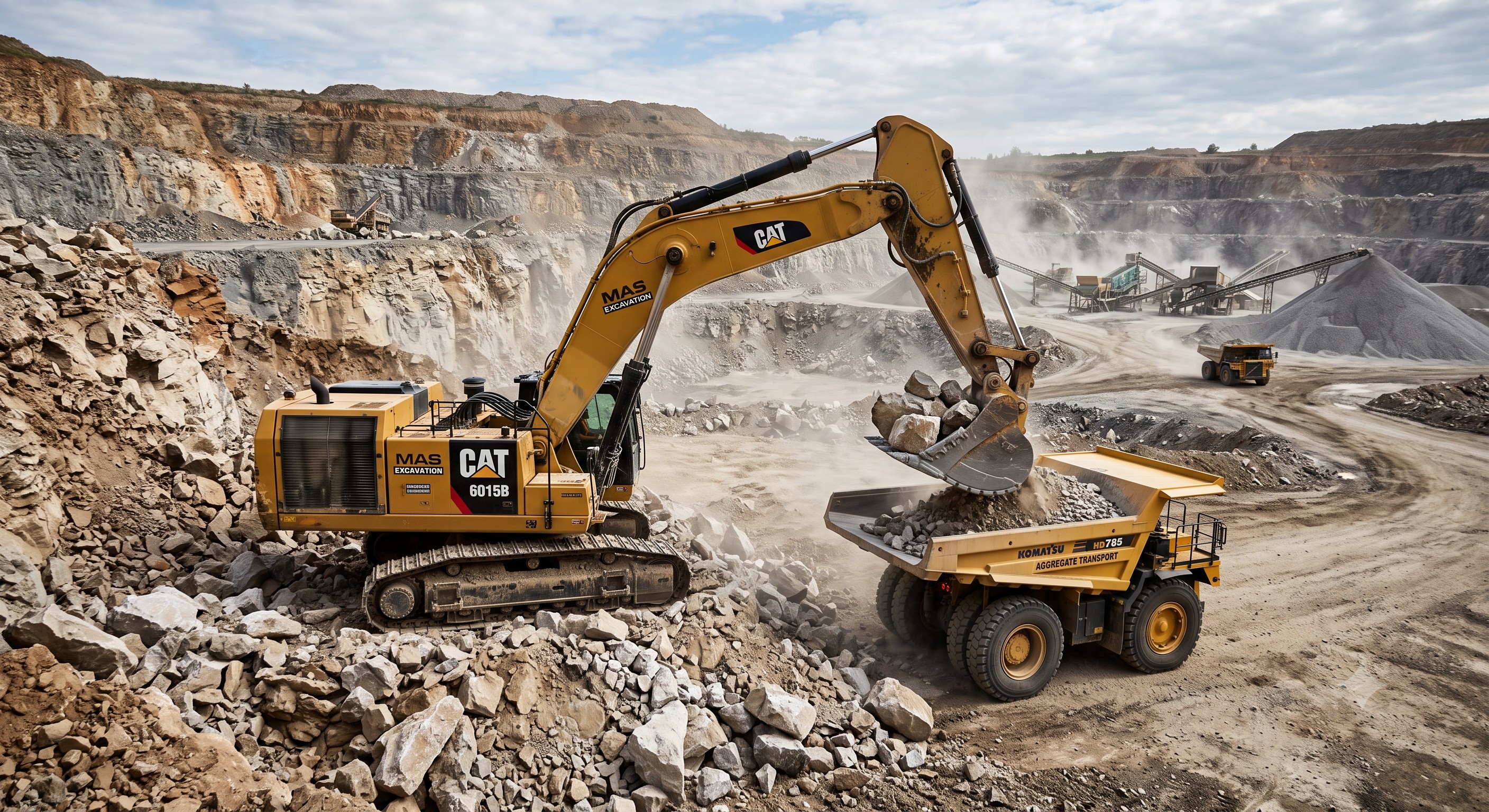
- Primary Production Loading: The primary application is loading blasted shot rock into haul trucks for transport to the primary crusher. The high breakout force and optimized cycle times are essential for keeping the crusher fed .
- Mass Excavation: In greenfield site development or large-scale earthmoving projects, these machines offer the power and reach to move vast quantities of material efficiently, often using mass-excavation configurations with short arms for maximum crowding force .
- Tough Overburden Stripping: Removing topsoil and overburden from the quarry face requires immense power and durability. The heavy-duty tracks and reinforced structures are built to withstand the rigors of this demanding work .
- Selective Material Handling: In aggregate plants, they are used for selective digging to separate valuable materials from waste, a task that requires precise hydraulic control and high torque .
Conclusion: The Ultimate Tool for Aggregate Productivity
In the demanding environment of a quarry, the difference between a standard excavator and a purpose-built mining machine is a matter of profitability and operational continuity. The key differentiators—a hardened undercarriage, high-pressure hydraulics, superior structural integrity, and specialized safety certifications—are not just specifications; they are the foundations of a lower Total Cost of Ownership. For operations seeking to maximize output per hour and minimize downtime, investing in a machine engineered for the quarry is an essential strategic decision. As the industry evolves towards increased automation and stricter emissions standards, the dedicated quarry excavator remains a testament to robust engineering, driving productivity and safety in the most challenging industrial environments.