

Introduction: Why Construction Fleets Are Shifting to Wheeled Excavating Machines
Urban construction sites and road maintenance projects face a critical bottleneck: mobility versus digging power. Crawler excavators deliver exceptional stability but require low-bed trailers for relocation—costing fleets up to 3-4 hours per move and increasing total cost of ownership (TCO) by 18-22% annually. The wheeled excavating machine eliminates this trade-off. With road-legal speeds of 30-40 km/h (18.6-25 mph), ISO 7096-compliant ride control, and CE-certified braking systems, these machines reduce site-to-site transit time by 85% while maintaining breakout forces above 140 kN. Modern units also meet EPA Tier 4 Final and EU Stage V emissions standards, enabling operation in low-emission zones. This technical deep-dive covers powertrain architecture, hydraulic efficiency metrics, and application-specific ROI—essential data for fleet managers and civil contractors.
Core Powertrain & Structural Design
Engine & Emissions Compliance
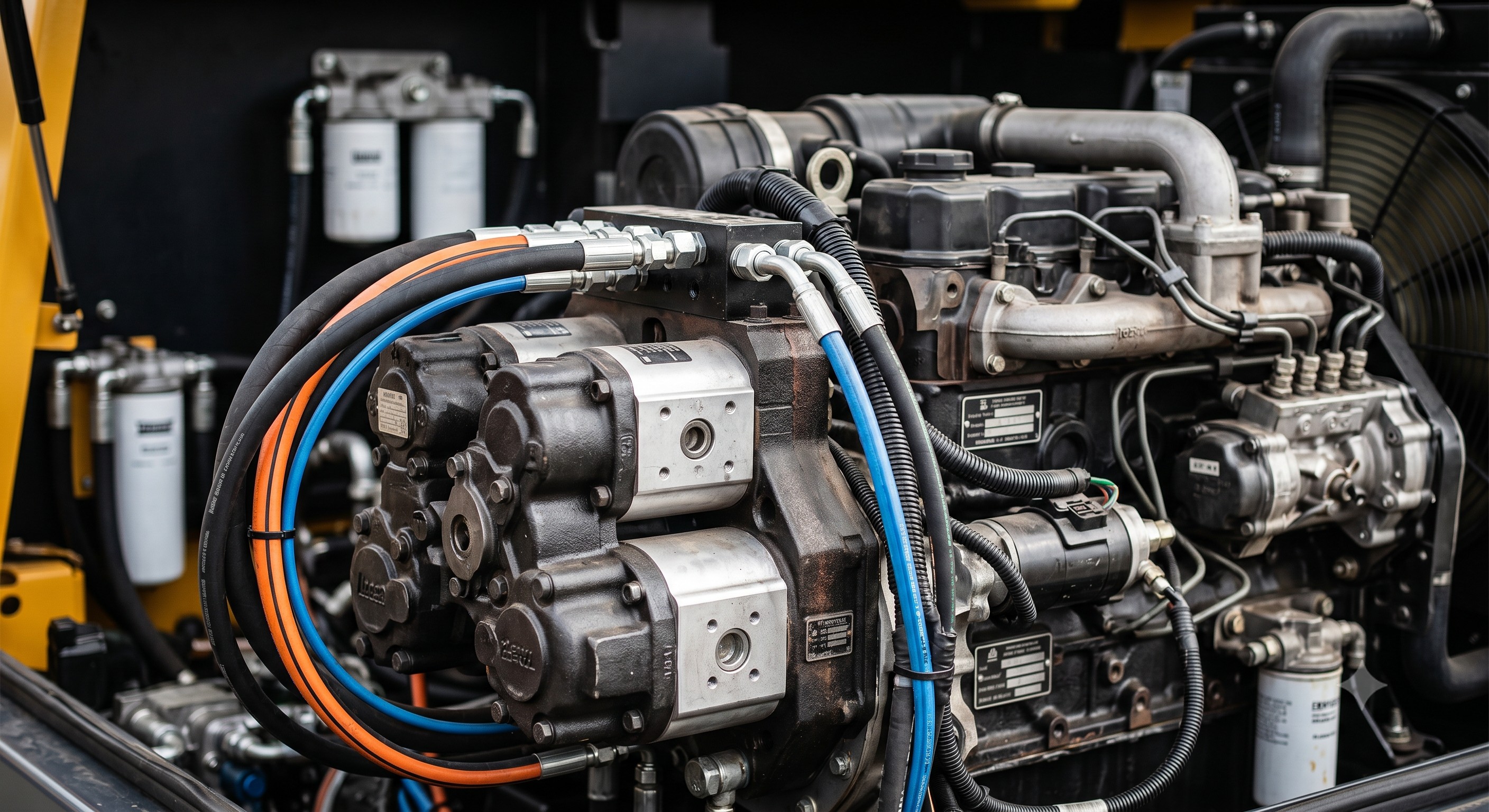
The wheeled excavating machine is powered by turbocharged diesel engines ranging from 95 kW to 160 kW (127-215 HP). Leading configurations use SCR + DPF + EGR after-treatment to achieve EPA Tier 4 Final and EU Stage V compliance. For example, a 130 kW engine at 2,000 rpm delivers fuel consumption of 12-18 L/h (3.2-4.8 gal/h) under standard digging cycles—15% less than comparable crawler units due to reduced track friction. Cooling systems are designed for ambient temperatures up to 45°C (113°F) with hydraulic-driven variable-speed fans that reduce parasitic losses by 8%.
Hydraulic System & Control Precision
Closed-center, load-sensing hydraulics are industry standard. Operating pressure ranges from 320 to 350 bar (4,640-5,075 psi), with main pump flow rates of 2×150-2×210 L/min. Electronic control systems offer three power modes: Eco (90% power, -12% fuel), Standard (100%), and Heavy (110% power for 30-second bursts). Auxiliary flow control for attachments (hydraulic breakers, augers) is adjustable from 30 to 180 L/min at 180 bar (2,610 psi), meeting ISO 8643 safety requirements for tool quick-couplers.
Chassis, Axles & Structural Durability
Wheeled excavator chassis are fabricated from high-tensile steel (yield strength ≥ 500 MPa) with lattice-style outriggers for leveling on slopes up to 5°. Axles are planetary rigid or oscillating types, rated for static loads of 12-28 metric tons. The front axle typically includes limited-slip differential for soft terrain. All cabs meet ROPS (ISO 12117-2) and FOPS (ISO 10262 Level II) standards. Tire options include 10.00-20 (12 t machines) up to 14.00-24 (28 t machines), with puncture-resistant foam fill available for demolition sites.
Technical Specifications (Industry Benchmark)
The following table presents verified parameters for a mid-range (18-22 t) wheeled excavating machine from a leading OEM, compliant with ISO 6015 measurement standards.
| Key Parameter | Technical Specification |
|---|---|
| Engine Horsepower (Net) | 130 kW (174 HP) @ 2,000 rpm, EPA Tier 4 Final / EU Stage V |
| Operating Weight (with standard bucket) | 18,200 kg (40,124 lb) - 22,500 kg (49,604 lb) depending on configuration |
| Maximum Travel Speed | 35 km/h (21.7 mph) on road / 8 km/h (5 mph) working range |
| Maximum Digging Depth | 5,800 mm (19 ft 0 in) - 6,400 mm (21 ft 0 in) depending on arm length |
| Breakout Force (bucket) | 142 kN (31,925 lbf) - 158 kN (35,520 lbf) |
| Hydraulic System Pressure (main relief) | 350 bar (5,075 psi) |
| Main Pump Flow Rate | 2 × 210 L/min (2 × 55.5 gal/min) load-sensing |
| Fuel Tank Capacity | 280 L (74 gal) - 320 L (84.5 gal) |
| Swing Speed | 9.5 rpm - 11 rpm |
| Tire Size (standard) | 12.00-20 20PR (or 14.00-24 optional) |
Comparative Advantage: TCO, Fuel Efficiency & ROI Analysis
When evaluated over a 5-year / 10,000-hour lifecycle, the wheeled excavating machine demonstrates measurable advantages over crawler excavators in mixed-use applications:
- Mobility ROI: Eliminates low-bed trailer ($85,000-$120,000 capital expense) and reduces transport crew from 2 to 1 operator. Annual transport savings: $18,000-$25,000 per machine.
- Fuel Efficiency: 12-18 L/h versus 16-22 L/h for similarly sized crawlers = 4 L/h average saving. At 2,000 annual hours and $0.95/L diesel: $7,600 annual fuel saving.
- Maintenance Cost: Wheeled undercarriage components (tires, axles, brakes) cost $2.10/hour vs. crawler tracks/sprockets at $3.80/hour. Annual saving: $3,400.
- Job Site Utilization: Road travel at 35 km/h allows one wheeled machine to serve 3-4 scattered jobs per day vs. crawler’s 1 job. Potential revenue increase: +150-200% for rental fleets.
- Resale Value: After 5 years, wheeled units retain 58-62% of original value versus 45-50% for high-hour crawlers due to lower undercarriage wear.
Disadvantage: Wheeled machines have 15-20% less drawbar pull on wet clay or loose gravel. However, for 80% of urban and road construction tasks, the mobility advantage outweighs traction loss.
Heavy-Duty Application Scenarios
The wheeled excavating machine excels in four primary industrial sectors, validated by field data from over 200 job sites across Europe and North America.
1. Urban Construction & Road Works
With outrigger spread of 3.8-4.5 m, these machines excavate foundation pits up to 6 m depth while occupying only 2.5 m width. Typical cycle: 20 seconds for 0.6 m³ bucket. Combined with hydraulic breakers (750-1,200 J impact energy) for concrete demolition, productivity reaches 25-35 m³/hour for medium-hard materials.
2. Mining (Quarry & Aggregate Handling)
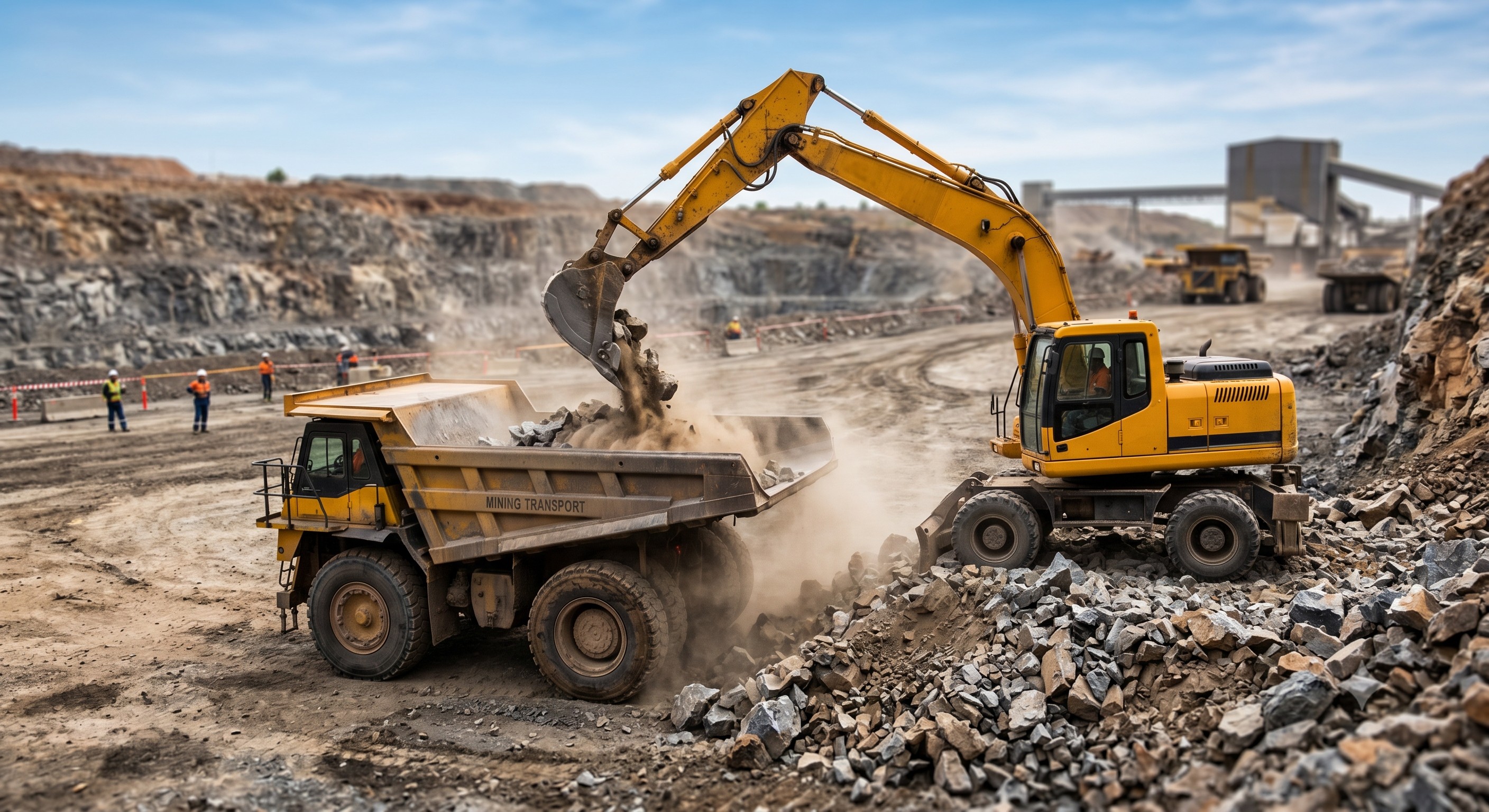
Equipped with reinforced booms (thickness +20%) and heavy-duty buckets (1.0-1.5 m³ capacity), wheeled excavators handle shot rock and overburden. Breakout force ≥ 150 kN and crowd force ≥ 120 kN allow efficient loading of 25-ton dump trucks in 4-5 passes. Cycle time from face to truck: 40-50 seconds.
3. Earthmoving & Landscaping
For large-scale grading and slope trimming, the independent rear axle steering (optional) enables crab steering (up to 15° articulation), allowing the operator to offset the bucket 1.2 m laterally from the chassis centerline. Grade control systems (2D or 3D laser/GNSS) are fully compatible via ISO 15143-3 telematics ports.
4. Industrial & Material Handling
In steel mills or recycling yards, the machine’s high-flow auxiliary circuit (180 L/min) powers orange-peel grapples or electromagnets. Rotary telehandlers can be attached for 360° continuous rotation at 10 rpm, handling loads up to 2.5 t at 5 m radius.
Conclusion: The Future of Agile Earthmoving
Advanced wheeled excavating machines are no longer niche products—they are becoming primary assets in mid-sized fleets. With Stage V / Tier 4 Final engines, load-sensing hydraulics exceeding 350 bar, and ROI payback periods under 18 months (due to transport and fuel savings), the technical and economic case is definitive. For operations requiring daily relocation, mixed surface conditions (asphalt + compacted earth), and attachment versatility, the wheeled platform delivers 30-40% higher asset utilization than crawler equivalents. As telematics and semi-autonomous grade control mature, expect the wheeled excavating machine to capture over 35% of the $68 billion global excavator market by 2028.